
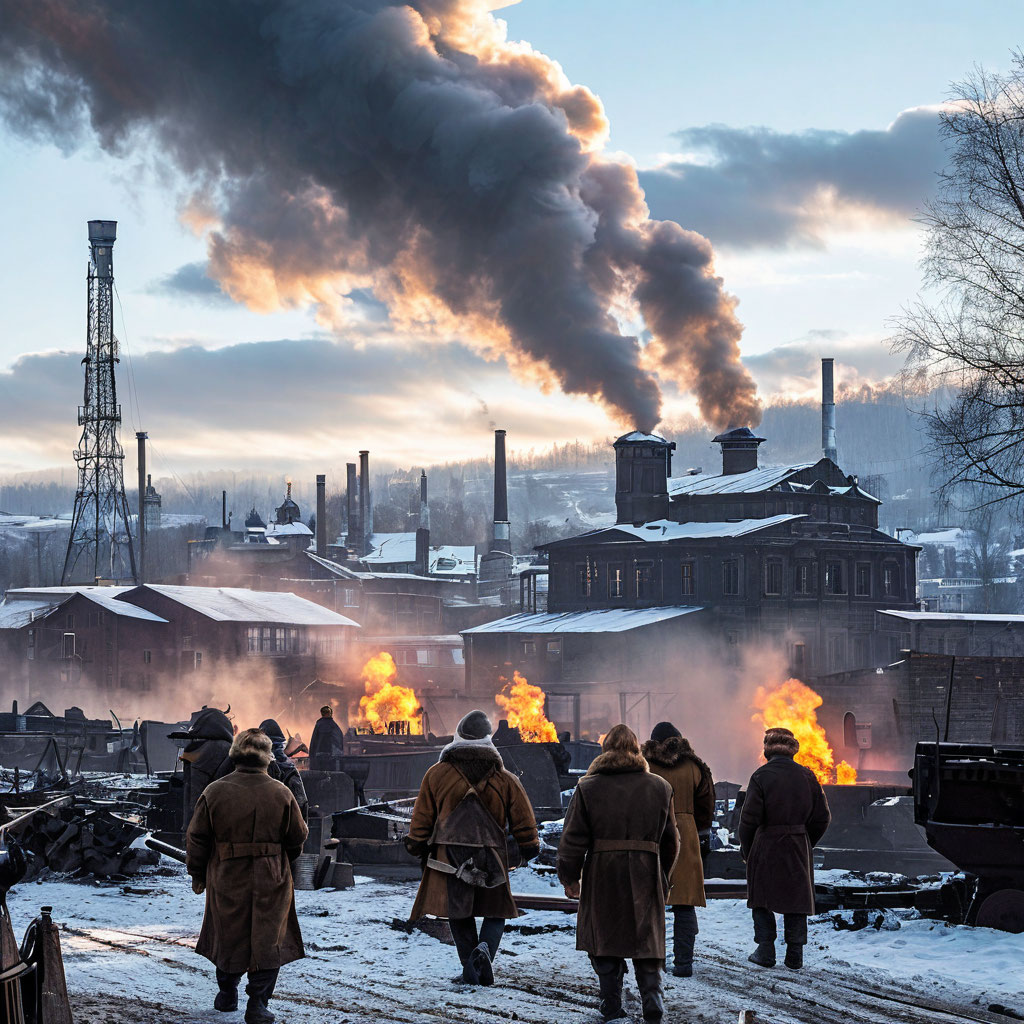
The Rise of Nizhny Tagil Ironworks: Demidovs Enter the Global Market
Imagine a time when the Ural Mountains were not just a rugged backdrop but the heartbeat of Russia’s industrial revolution. Picture the year 1725, when the Nizhny Tagil Ironworks began its journey, setting the stage for the Demidov family’s monumental impact on the global iron industry. This isn’t just a tale of furnaces and steel; it’s a story of visionaries, innovation, and a legacy that resonates through time.
The Birth of Nizhny Tagil Ironworks
In the early 18th century, Russia was on the cusp of transformation. The Ural Mountains, rich in iron ore, beckoned entrepreneurs and visionaries. Among them was Nikita Demidov, a man whose ambition matched the vastness of the Russian landscape. In 1725, he established the Nizhny Tagil Ironworks, a venture that would not only revolutionize Russian metallurgy but also place the Demidov name on the world map.
The Demidov Dynasty: Pioneers of Russian Metallurgy
The Demidov family’s journey into metallurgy was nothing short of groundbreaking. Starting with the Nevyansk plant in 1702, they expanded rapidly, building 55 metallurgical plants, including 40 in the Urals. By 1740, their factories produced about 64% of all Ural and 46% of Russian iron. Their productivity was remarkable, averaging 70% higher than that of state-owned factories. This wasn’t just business; it was a revolution in iron production.
From Local to Global: The Demidovs’ International Reach
By 1716, the Demidovs had set their sights beyond Russia’s borders. They became the first Russian exporters of iron to Western Europe, marking a significant milestone in global trade. Their products, renowned for quality, began to flow into markets that had previously been dominated by other nations. This wasn’t just about iron; it was about establishing Russia as a formidable player on the global industrial stage.
The Nizhny Tagil Ironworks: A Legacy of Innovation
The Nizhny Tagil Ironworks wasn’t just another factory; it was a beacon of innovation. Strategically located in the Ural Mountains, it had access to abundant iron ore, forests for fuel, and rivers for transportation. This ideal setting allowed the ironworks to thrive, producing high-quality iron that met both domestic and international demands. The Demidovs’ commitment to excellence ensured that Nizhny Tagil became synonymous with quality iron production.
The Impact on Russian Industry and Beyond
The Demidovs’ influence extended far beyond the walls of their factories. By the end of the 18th century, the Ural factories, many of which were under Demidov ownership, produced 80.1% of cast iron, 88.3% of iron, and 100% of copper in Russia. This dominance not only fueled Russia’s industrial growth but also positioned it as a leading producer of iron and copper globally. The Demidovs had not just entered the global market; they had reshaped it.
The Enduring Legacy of the Demidov Family
The story of the Demidovs is a testament to vision, innovation, and resilience. From humble beginnings to global prominence, they transformed the Ural Mountains into a powerhouse of metallurgy. Their legacy is not just in the iron they produced but in the spirit of entrepreneurship and determination they embodied. The Nizhny Tagil Ironworks stands as a monument to their achievements, a reminder of a time when a single family’s vision could change the course of history.
As we reflect on this journey, it’s clear that the Demidovs’ impact was profound and lasting. They didn’t just build factories; they built a foundation for Russia’s industrial future, leaving a legacy that continues to inspire and influence the world of metallurgy today.
