
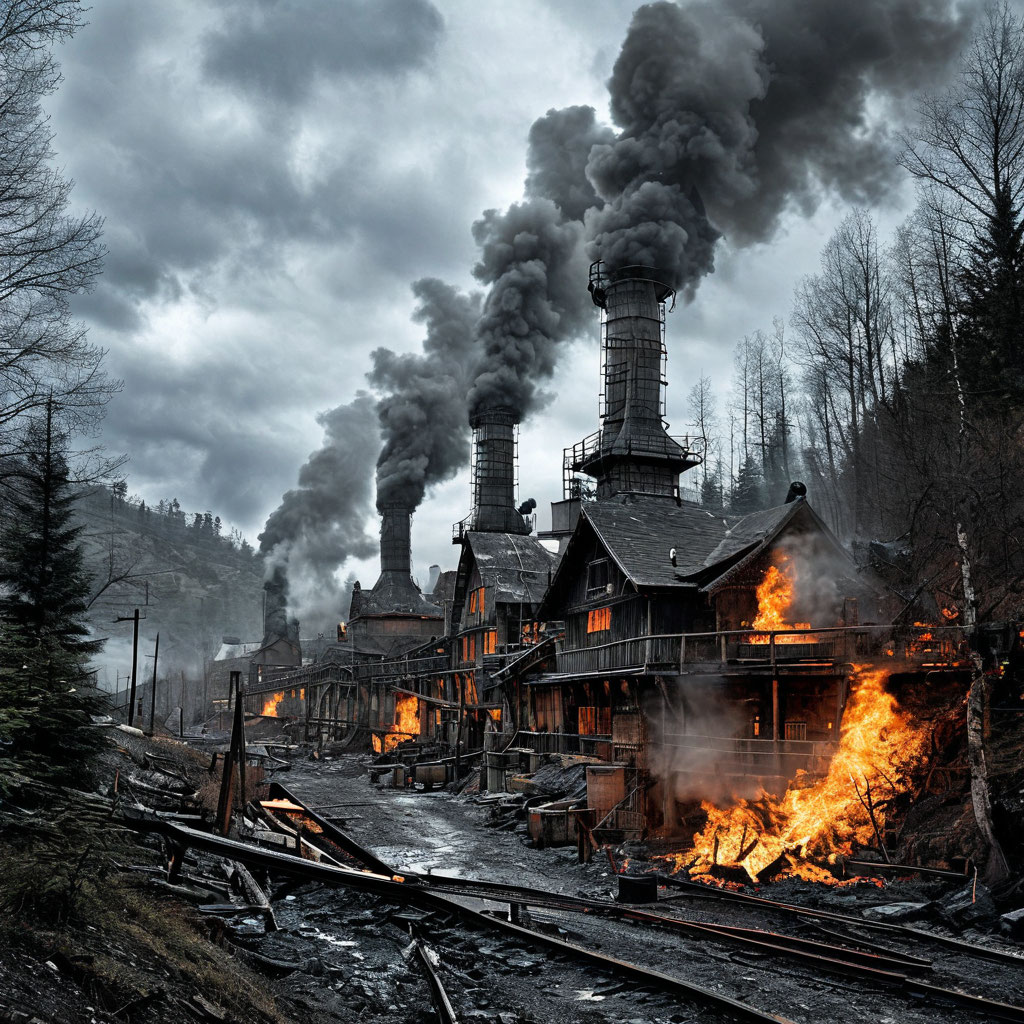
The Alapayevsk Foundry: Pioneering Iron Production in the Northern Urals
Imagine a time when the vast expanse of the Russian Empire was just beginning to tap into the rich mineral resources hidden beneath its rugged terrains. The early 18th century was a period of exploration and industrial ambition, and nestled in the heart of the Northern Urals, a remarkable venture was about to unfold—the establishment of the Alapayevsk Foundry in 1704. This wasn’t just the birth of a factory; it was the dawn of a new era in Russian metallurgy.
The Genesis of Alapayevsk Foundry
In 1704, under the visionary leadership of Tsar Peter the Great, Russia embarked on a mission to harness its abundant natural resources. Recognizing the strategic importance of iron for military and economic strength, Peter I ordered the construction of a state-owned ironworks along the Alapaikha River. This initiative aimed to reduce Russia’s dependence on foreign metal imports and to bolster its burgeoning industrial capabilities. The Alapayevsk Foundry, as it came to be known, was among the first of its kind in the Urals, setting the stage for the region’s industrial transformation.
The Early Years: Challenges and Triumphs
The initial years were fraught with challenges. The founders grappled with the complexities of establishing a metallurgical plant in a remote and undeveloped area. Yet, their perseverance paid off. By 1706, the foundry was operational, producing its first batches of cast iron. This achievement was monumental, not just for Alapayevsk but for Russia as a whole, marking the nation’s entry into the ranks of industrialized nations.
Expansion and Innovation
As the years progressed, the Alapayevsk Foundry expanded its operations. In 1766, the plant underwent significant modernization under the ownership of Sawa Jakovlevich Sobakin. His investments led to the introduction of advanced technologies, including the installation of a 15-ton open-hearth furnace in 1895. This furnace was a game-changer, replacing outdated puddling furnaces and significantly enhancing production efficiency. The foundry’s ability to adapt and innovate ensured its continued relevance in the rapidly evolving industrial landscape of the time.
Survival Through Turmoil
The early 20th century brought unprecedented challenges. The Russian Civil War (1917-1920) led to a temporary shutdown of the foundry. However, the resilience of the workers and the strategic importance of the plant ensured its revival in 1919. The interwar period saw further advancements, including the addition of a Siemens-Martin furnace and a rolling mill, which expanded the foundry’s production capabilities and product range.
World War II and Post-War Renaissance
World War II tested the mettle of the Alapayevsk Foundry. During the war, the plant’s production was entirely reoriented to meet military needs, underscoring its strategic significance. Post-war, the foundry underwent a renaissance. In 1946, a new blast furnace was constructed, the most modern in the Soviet Union at the time. This period of reconstruction and growth solidified the foundry’s position as a cornerstone of Russian industry.
The Decline and Attempts at Revival
The latter half of the 20th century presented new challenges. The rise of large metallurgical combines in the 1970s led to increased competition, and the Alapayevsk Foundry faced difficulties in maintaining its production levels. In 2004, the plant ceased operations, marking the end of an era. However, in 2011, the NOVAEM company acquired the facility, investing in its reconstruction and attempting to revive its operations. Despite these efforts, the foundry faced insurmountable challenges and ceased operations in 2013, closing a significant chapter in Russia’s industrial history.
Legacy and Significance
The Alapayevsk Foundry’s journey is a testament to human ingenuity, resilience, and the relentless pursuit of progress. From its humble beginnings in 1704 to its rise as a pivotal industrial hub, the foundry played a crucial role in shaping Russia’s metallurgical industry. Its legacy is not just in the iron it produced but in the spirit of innovation and determination it embodied. Today, the remnants of the Alapayevsk Foundry stand as silent witnesses to a bygone era, inviting us to reflect on the transformative power of industry and the indomitable human spirit that drives it.
As we look back on the history of the Alapayevsk Foundry, we are reminded of the profound impact that industrial pioneers have on shaping the course of nations. Their stories, filled with challenges and triumphs, continue to inspire and inform our understanding of the complex tapestry of human progress.
