
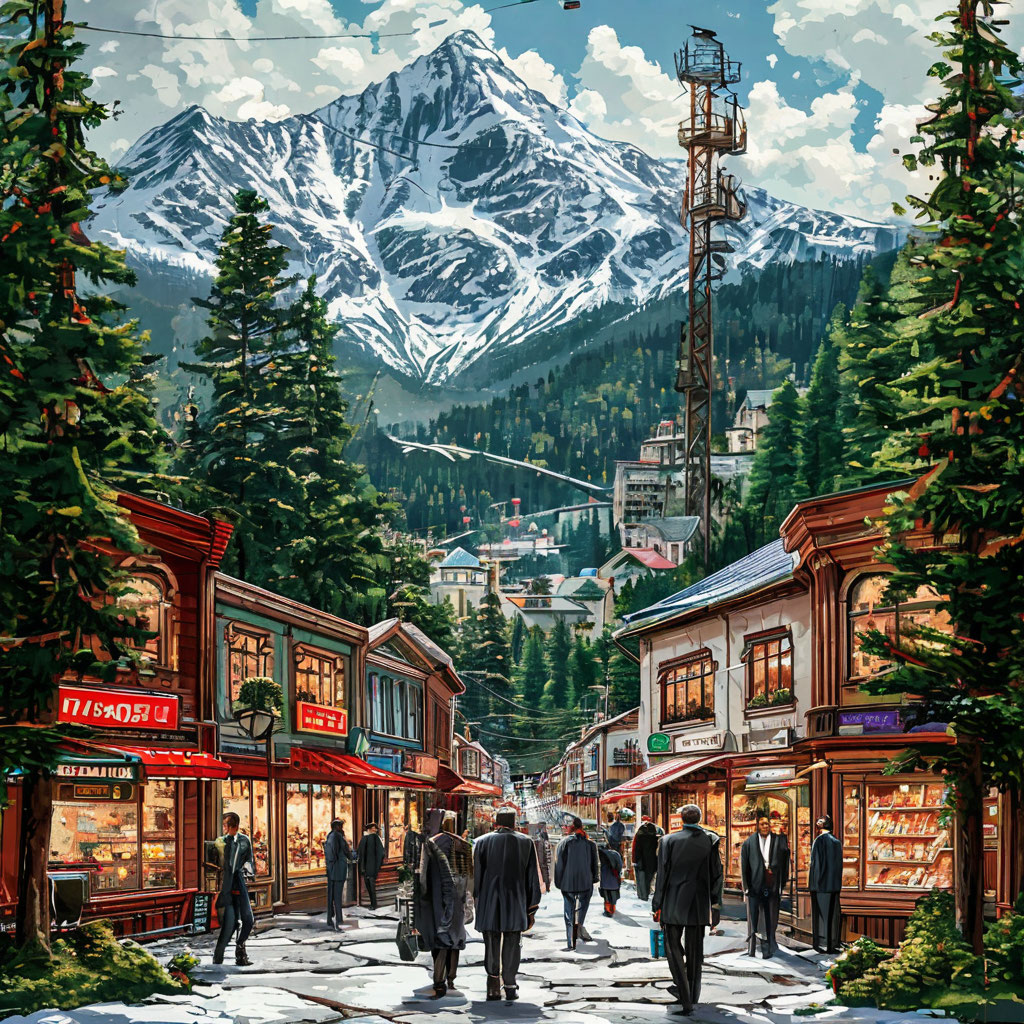
The Transformation of Ural’s Economy in the Post-Soviet Era
Imagine a vast expanse stretching from the Ural Mountains to the Siberian plains—a region rich in history, culture, and industry. This is the Ural, a land that has undergone profound economic transformations since the dissolution of the Soviet Union. Let’s embark on a journey through time to explore how the Ural’s economy has evolved, the challenges it has faced, and the resilience that has shaped its current landscape.
The Soviet Legacy: A Foundation of Industrial Might
Before the Soviet Union’s collapse in 1991, the Ural was a powerhouse of heavy industry. Cities like Sverdlovsk (now Yekaterinburg) were bustling centers of metallurgy, machine engineering, and defense production. The region’s factories churned out everything from steel to military equipment, fueling the Soviet economy and contributing significantly to its industrial output.
The 1990s: Navigating the Storm of Transition
The early 1990s were a tumultuous period for the Ural. The shift from a centrally planned to a market economy was like navigating a ship through a storm without a compass. Industries that had once been the pride of the Soviet Union faced bankruptcy, and unemployment rates soared. For instance, the Sverdlovsk region, a key industrial hub, saw its industrial output plummet as enterprises struggled to adapt to new economic realities. ([elar.urfu.ru](https://elar.urfu.ru/handle/10995/64212?utm_source=openai))
However, amidst the chaos, a new spirit of entrepreneurship began to emerge. Former state-owned enterprises were privatized, and new businesses sprouted, aiming to fill the void left by the old industrial giants. This period was marked by a sense of uncertainty, but also by a burgeoning desire to rebuild and redefine the region’s economic identity.
The 2000s: A New Dawn of Industrial Revival
As the dust settled, the Ural embarked on a path of industrial revival. The 2000s witnessed significant investments in modernization and technological upgrades. Metallurgical plants, once relics of the past, were transformed with state-of-the-art equipment and processes. The introduction of electric arc furnaces and continuous casting methods revolutionized steel production, making it more efficient and environmentally friendly. ([en.wikipedia.org](https://en.wikipedia.org/wiki/History_of_metallurgy_in_the_Urals?utm_source=openai))
Moreover, the formation of vertically integrated companies became a hallmark of this era. These conglomerates, such as the Ural Mining and Metallurgical Company (UMMC), consolidated various stages of production, from raw material extraction to finished products. This integration streamlined operations and enhanced competitiveness in both domestic and international markets.
The 2010s: Embracing Diversification and Innovation
The 2010s marked a significant shift towards diversification and innovation. The Ural, once synonymous with heavy industry, began to embrace sectors like information technology, pharmaceuticals, and renewable energy. Cities like Yekaterinburg emerged as tech hubs, attracting startups and fostering a culture of innovation. The region’s universities and research institutions played a pivotal role in this transformation, bridging the gap between academia and industry.
However, this period was not without its challenges. The global economic landscape was changing, and the Ural had to adapt to new market dynamics. The decline in global oil prices affected the region’s oil and gas sector, prompting a reevaluation of its economic strategies. Nevertheless, the Ural’s ability to adapt and innovate ensured its continued growth and relevance in the 21st century.
The 2020s: Resilience Amidst Global Uncertainties
The current decade has been characterized by resilience and adaptability. The Ural has faced external pressures, including economic sanctions and global supply chain disruptions. Yet, the region’s industries have demonstrated remarkable agility. Metallurgical plants have modernized further, adopting green technologies and reducing their carbon footprint. The Ural’s machine engineering sector has diversified, producing equipment for various industries, including renewable energy and electric vehicles.
Moreover, the Ural has strengthened its economic ties with neighboring regions and countries. The formation of economic alliances and participation in international trade agreements have opened new markets for Ural products. This interconnectedness has not only bolstered the region’s economy but also fostered cultural and technological exchanges, enriching the Ural’s social fabric.
Looking Ahead: A Vision for the Future
As we look to the future, the Ural stands at a crossroads. The lessons of the past—resilience, adaptability, and innovation—serve as a compass guiding the region forward. The Ural’s rich industrial heritage provides a solid foundation upon which to build a diversified and sustainable economy. By investing in education, embracing technological advancements, and fostering a culture of entrepreneurship, the Ural can continue to thrive in an ever-changing global landscape.
In conclusion, the transformation of the Ural’s economy in the post-Soviet era is a testament to the region’s enduring spirit and capacity for reinvention. From the ashes of the Soviet industrial complex, the Ural has emerged as a dynamic and multifaceted economic region, poised to face the challenges and opportunities of the future with confidence and determination.
