
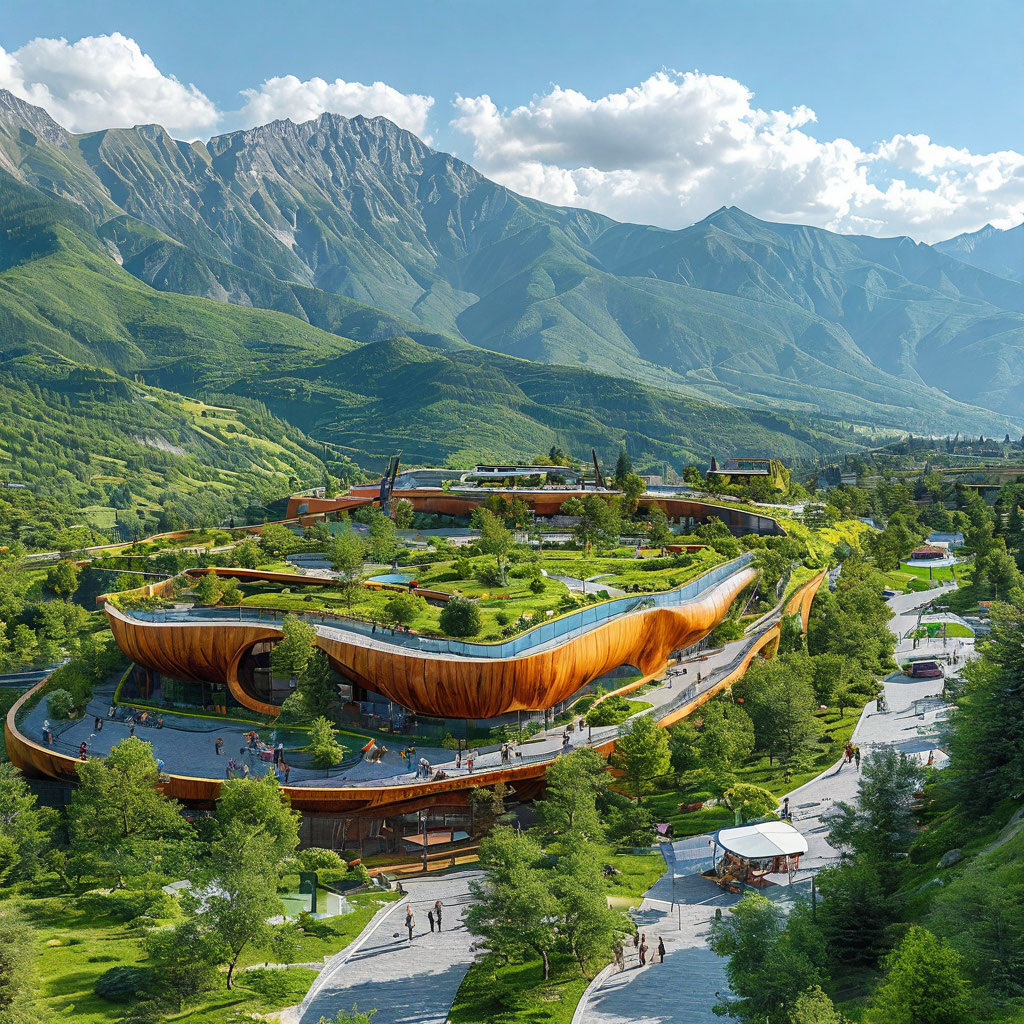
The Ural’s Cultural Centrism: A Pillar for Sustainable Development
Imagine a land where ancient myths intertwine with modern industry, where diverse cultures coexist harmoniously, and where the past and future converge to shape a unique identity. Welcome to the Ural region—a place where cultural centrism serves as a cornerstone for sustainable development. Let’s embark on a journey to explore how the rich tapestry of Ural’s heritage not only preserves its essence but also propels its future.
The Ural’s Cultural Mosaic
The Ural Mountains, stretching across Russia, are more than just a geographical landmark; they are a cultural crossroads. Home to over 160 nationalities, the region boasts a vibrant mix of traditions, languages, and customs. This diversity is not merely a statistic; it’s the heartbeat of the Ural’s identity. For instance, the indigenous peoples like the Bashkirs, Mari, Komi-Zyrians, and Udmurts have their own unique myths and legends that have been passed down through generations. These stories, deeply embedded in the region’s folklore, offer insights into the ancient worldview and continue to influence contemporary culture. ([book.uraic.ru](https://book.uraic.ru/project/exhibition/narody-urala/?utm_source=openai))
Industrial Heritage Meets Cultural Revival
Historically, the Urals have been synonymous with industry. Cities like Yekaterinburg, Chelyabinsk, and Perm have long been industrial powerhouses, contributing significantly to Russia’s economic development. However, this industrial boom often came at the expense of cultural and environmental considerations. In recent years, there’s been a conscious effort to balance industrial growth with cultural preservation. The Ural Industrial Biennale, for example, is a testament to this fusion. It brings together contemporary art and industrial heritage, transforming factories and plants into exhibition spaces. This initiative not only revitalizes old industrial sites but also fosters a dialogue between the past and present, highlighting the region’s unique “mountain civilization.” ([kommersant.ru](https://www.kommersant.ru/doc/5090285?utm_source=openai))
Revitalizing Small Towns Through Cultural Engagement
Beyond the bustling industrial centers, the Urals are dotted with small towns that once thrived on mining and metallurgy. Today, many of these towns face economic challenges and population decline. However, cultural centrism offers a beacon of hope. By leveraging their rich cultural and industrial heritage, these towns are finding new avenues for development. For instance, the town of Irbit, known for its historical fair, is exploring ways to revitalize its economy by promoting its unique cultural identity. This approach not only preserves the town’s heritage but also creates sustainable economic opportunities. ([maximprivezentsev.com](https://www.maximprivezentsev.com/blog/tpost/5i5lmsipn1-odushevlennost-landshafta-v-vozrozhdenii?utm_source=openai))
Integrating Cultural Heritage into Sustainable Development
The Ural’s commitment to cultural centrism aligns with global initiatives like the Faro Convention, which emphasizes the role of cultural heritage in sustainable development. By recognizing the value of cultural assets, the Urals are not only preserving their history but also enhancing the quality of life for their residents. This approach fosters a sense of pride and belonging, encouraging community engagement and sustainable practices. Moreover, it attracts tourism, creating economic opportunities while promoting cultural exchange. ([ru.wikipedia.org](https://ru.wikipedia.org/wiki/%D0%9A%D0%BE%D0%BD%D0%B2%D0%B5%D0%BD%D1%86%D0%B8%D1%8F_%D0%A4%D0%B0%D1%80%D1%83?utm_source=openai))
Conclusion: A Model for the Future
The Ural region exemplifies how cultural centrism can drive sustainable development. By honoring its diverse heritage and integrating it into modern initiatives, the Urals are crafting a future that respects the past while embracing innovation. This harmonious blend serves as a model for other regions, demonstrating that sustainable development is not just about economic growth but also about cultural preservation and community well-being. So, the next time you think of the Urals, envision a region where culture and progress walk hand in hand, creating a vibrant and sustainable future for all.
