
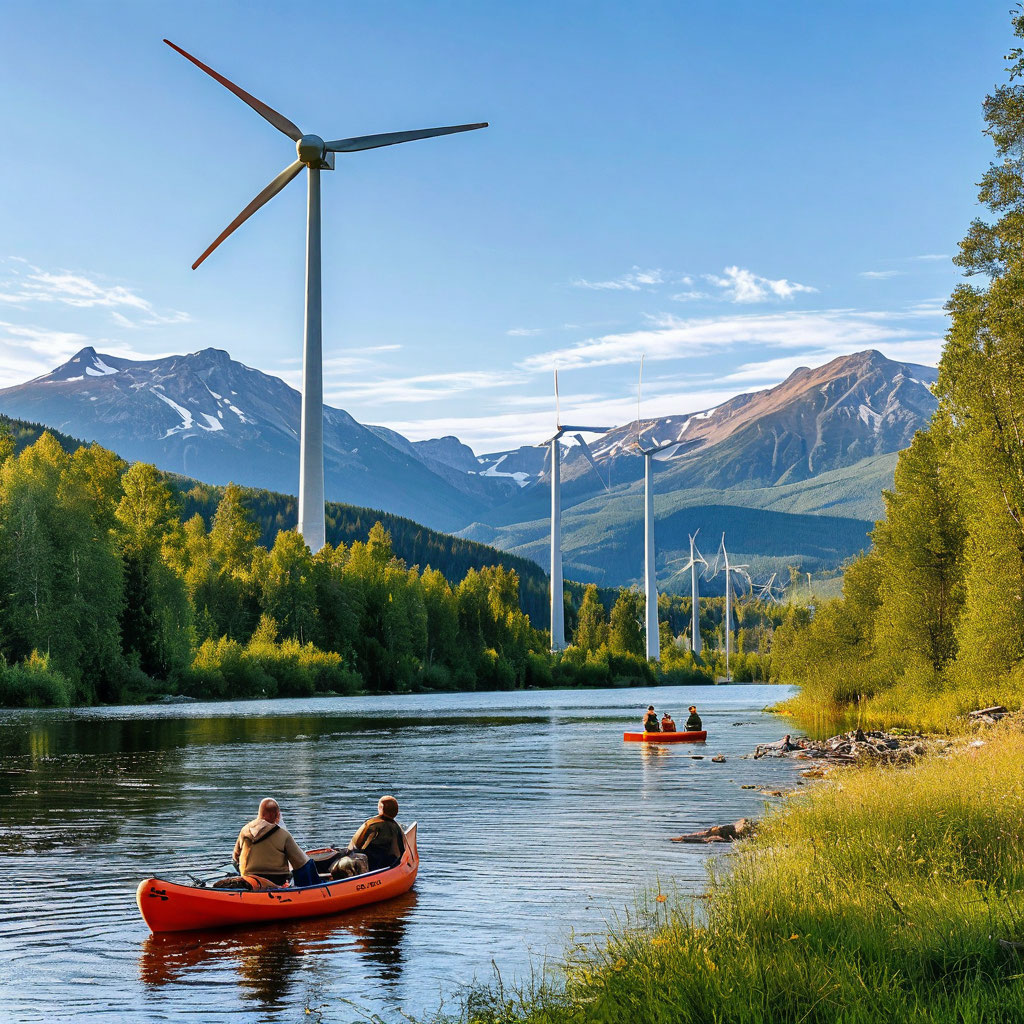
Renewable Energy Projects in the Urals: A Green Transformation
Imagine a region where the echoes of industrial heritage blend seamlessly with the hum of clean energy innovations. Welcome to the Urals—a vast expanse in Russia that has long been synonymous with heavy industry and rich natural resources. However, in recent years, this region has been undergoing a remarkable transformation, embracing renewable energy sources to power its future. Let’s embark on a journey through the Urals to explore how solar panels are replacing smokestacks and wind turbines are taking flight in this industrial heartland.
The Ural’s Industrial Legacy
The Urals, stretching from the Arctic Ocean to Kazakhstan, have been the backbone of Russia’s industrial prowess. Cities like Yekaterinburg and Chelyabinsk have been centers of metallurgy, machinery, and energy production. The Sredneuralskaya State District Power Plant, for instance, has been a cornerstone of the region’s energy supply since 1936, evolving over the decades to meet the growing demands of the area. ([en.wikipedia.org](https://en.wikipedia.org/wiki/Sredneuralskaya_GRES?utm_source=openai))
Solar Energy: A Bright New Dawn
In the heart of the Sverdlovsk region, the Artinsky district has become a beacon of solar energy. In 2024, three large-scale solar power plants with a combined capacity of 37.9 MW were commissioned. These facilities are not just power generators; they symbolize a shift towards sustainable energy. The project, a collaboration between Rosseti Ural and Hevel Group, involved an investment of over 2.7 billion rubles. ([tadviser.com](https://tadviser.com/index.php/Project%3ARosseti_Ural_%28IDGC_of_Urals%29_%28Integrated_projects_for_creation_of_engineering_systems%29?utm_source=openai))
These solar plants are more than just energy producers. They are environmental champions, annually reducing CO₂ emissions by 14,000 tons. The total area of these plants is about 90 hectares—imagine 126 football fields dedicated to harnessing the sun’s power. Over 116,000 heterostructural solar modules, produced domestically, have been installed, showcasing Russia’s growing capabilities in renewable technology. ([tadviser.com](https://tadviser.com/index.php/Project%3ARosseti_Ural_%28IDGC_of_Urals%29_%28Integrated_projects_for_creation_of_engineering_systems%29?utm_source=openai))
Wind Energy: Harnessing the Ural’s Breezes
While the Urals are often associated with cold, harsh winters, they also possess a hidden asset: wind. The Tyupkildy wind farm in the Republic of Bashkortostan stands as a testament to this potential. Operating within the Integrated Energy System of the Urals, this wind farm contributes to the region’s renewable energy mix, highlighting the adaptability of the Urals to diverse energy sources. ([preprints.org](https://www.preprints.org/manuscript/202412.0285?utm_source=openai))
Hydropower: Tapping into Flowing Resources
Hydropower has been a longstanding component of Russia’s energy strategy, and the Urals are no exception. The region’s rivers and reservoirs offer significant potential for hydroelectric power generation. The Volzhskaya Hydroelectric Power Station, for example, plays a crucial role in supplying electricity to the Volga-Urals region. ([eia.gov](https://www.eia.gov/international/content/analysis/countries_long/russia/?utm_source=openai))
Corporate Initiatives: Leading by Example
Major corporations are also stepping up their game. Udmurtneft, a leading oil producer in the Udmurt Republic, has integrated solar energy into its operations. By installing solar panels at remote oil production facilities, Udmurtneft not only reduces its carbon footprint but also ensures a stable power supply to areas previously dependent on diesel generators. This initiative aligns with Rosneft’s broader strategy to incorporate renewable energy into its operations, demonstrating a commitment to sustainable practices. ([rosneft.com](https://www.rosneft.com/press/news/item/217743/?utm_source=openai))
Challenges and Opportunities
Despite these advancements, the path to a fully renewable energy future in the Urals is not without obstacles. The region’s deep-rooted industrial base, reliance on fossil fuels, and the need for substantial investment in infrastructure pose significant challenges. Moreover, the existing regulatory framework has been slow to adapt to the rapid changes in the energy sector, hindering the swift implementation of renewable projects. ([eurekalert.org](https://www.eurekalert.org/news-releases/929930?utm_source=openai))
However, the potential rewards are immense. By diversifying its energy portfolio, the Urals can reduce its carbon footprint, attract green investments, and set a precedent for other industrial regions worldwide. The region’s vast land areas, especially in the southern parts, offer ample space for large-scale solar and wind farms, making it an ideal candidate for renewable energy expansion. ([eurekalert.org](https://www.eurekalert.org/news-releases/929930?utm_source=openai))
The Road Ahead
The Urals’ journey towards renewable energy is a microcosm of Russia’s broader energy transition. While challenges remain, the strides made in solar, wind, and hydropower projects are commendable. The region’s rich industrial heritage, combined with its commitment to innovation, positions it as a leader in Russia’s green energy revolution. As the world pivots towards sustainable energy solutions, the Urals stand ready to harness the power of the sun, wind, and water, lighting the way for a cleaner, greener future.
For more insights into Russia’s renewable energy initiatives, you can explore the following resources:
