
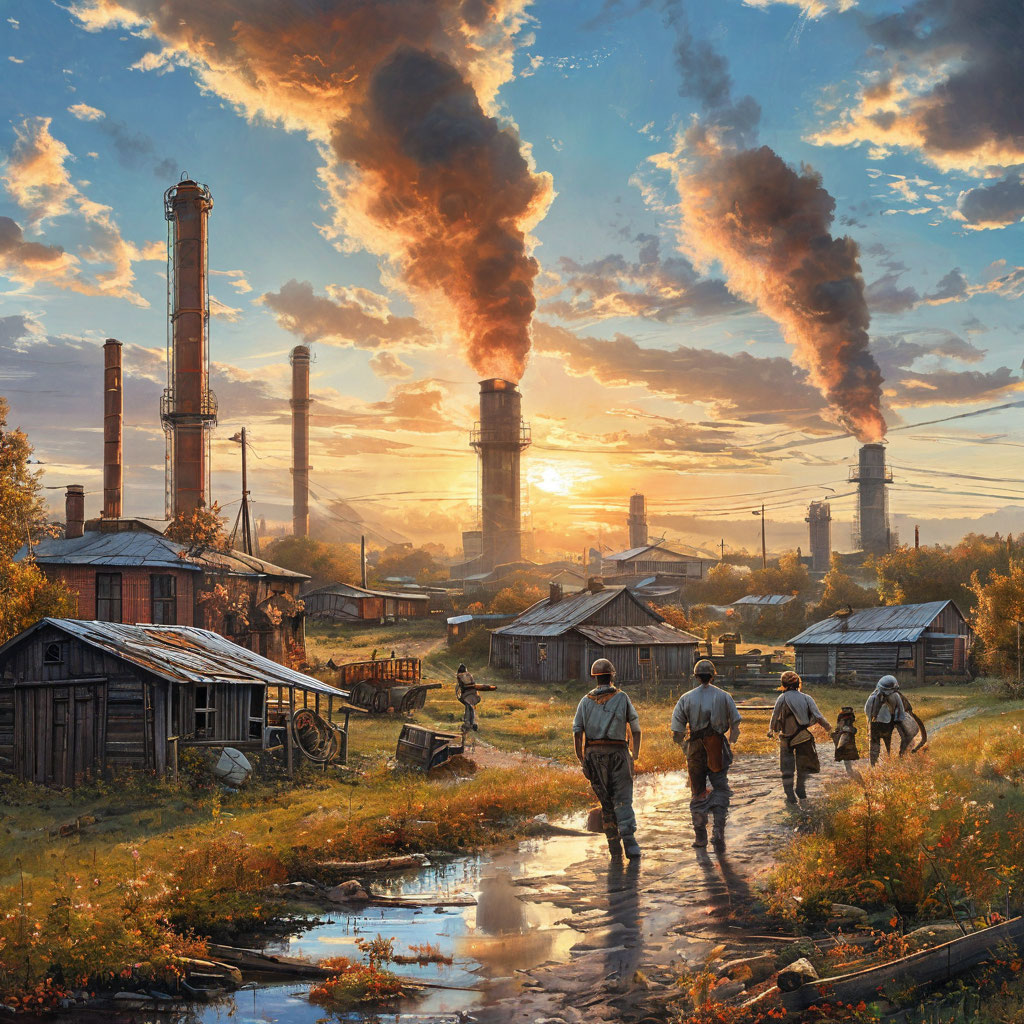
The Bogoslovsky Copper Works and the Birth of Karpinsk Town
Imagine a time when the Ural Mountains echoed with the rhythmic pounding of hammers and the hiss of molten metal. This was the heartbeat of the Bogoslovsky Copper Works, a monumental enterprise that not only shaped the region’s industrial landscape but also laid the foundation for the town of Karpinsk. Let’s journey back to the 18th century and explore how this copper giant rose from the earth and gave birth to a thriving community.
The Genesis of Bogoslovsky Copper Works
In the mid-1700s, the Ural Mountains were a treasure trove of natural resources, particularly rich in copper ore. Recognizing the potential, visionary entrepreneurs set their sights on harnessing this wealth. Among them was Mikhail Pokhodyaev, a man whose ambition and foresight would leave an indelible mark on the region.
In 1769, Pokhodyaev established the Bogoslovsky Copper Works, strategically located near the Turya River. This site was not only abundant in copper ore but also provided the necessary water resources to power the smelting processes. The works quickly became one of the largest copper production centers in the Urals, contributing significantly to Russia’s industrial prowess.
The Heartbeat of the Community
The Bogoslovsky Copper Works was more than just an industrial hub; it was the lifeblood of the surrounding community. The settlement that grew around the works was initially known as Bogoslovsk, a name derived from the nearby Church of the Presentation of the Virgin, also called the Church of Saint John the Evangelist. This church, constructed between 1761 and 1776, stood as a testament to the community’s faith and resilience. Its baroque architecture, with its ornate facades and intricate details, mirrored the prosperity and cultural richness of the time.
The church wasn’t just a place of worship; it was a symbol of the unity and spirit of the people. It witnessed countless baptisms, weddings, and community gatherings, serving as a cornerstone of social life. The church’s presence underscored the deep connection between the people and their faith, providing solace and strength amidst the challenges of industrial life.
The Rise and Fall of Copper Dominance
For over a century, the Bogoslovsky Copper Works thrived, its furnaces blazing day and night, producing copper that was exported far and wide. The settlement of Bogoslovsk flourished, with its population growing and its economy booming. The works attracted skilled laborers, artisans, and traders, transforming the area into a bustling industrial center.
However, as the years passed, the once-abundant copper ore began to dwindle. The relentless extraction took its toll, and by the early 20th century, the copper reserves were nearing exhaustion. The works faced a critical juncture: adapt or decline.
The Shift to Coal Mining
In 1911, in a bid to sustain the community’s economic vitality, the Bogoslovsky Copper Works diversified its operations. The focus shifted from copper to coal mining, tapping into the rich lignite deposits in the region. This strategic move breathed new life into the area, providing employment and maintaining the industrial momentum.
The coal mining operations were intensive, with workers laboring in open-pit mines to extract the lignite. The coal was primarily used for domestic heating and industrial purposes, fueling the continued growth of the region. The shift to coal mining marked a new chapter in the area’s industrial history, showcasing the community’s resilience and adaptability.
The Birth of Karpinsk
As the 20th century progressed, the settlement of Bogoslovsk underwent significant transformations. The expansion of coal mining operations led to increased population growth and urbanization. In 1941, recognizing the settlement’s growth and importance, the Soviet authorities granted it town status, naming it Karpinsk in honor of Alexander Karpinsky, a renowned Russian mineralogist and geologist. This name change was a tribute to the scientific heritage and the town’s deep connection to the earth’s mineral wealth.
The establishment of Karpinsk marked a new era. The town’s infrastructure expanded, schools and hospitals were built, and cultural institutions flourished. The legacy of the Bogoslovsky Copper Works lived on, not just in the town’s name but in its spirit and character. The community, forged in the crucible of industry, stood as a testament to human ingenuity and perseverance.
Legacy and Modern Times
Today, Karpinsk stands as a vibrant town, its streets lined with historical buildings that tell tales of a bygone era. The Church of the Presentation of the Virgin, now known as the Cathedral of the Presentation, continues to serve as a spiritual center, its baroque architecture a reminder of the town’s rich past. The town’s economy has diversified, but the echoes of the Bogoslovsky Copper Works can still be felt, a silent tribute to the industrious spirit that built Karpinsk.
The story of the Bogoslovsky Copper Works and the birth of Karpinsk is a narrative of transformation, resilience, and community. It reflects the broader themes of industrialization, adaptation, and the enduring human spirit. As you walk through the streets of Karpinsk, you are walking through history, a history that continues to inspire and inform the present.
Visiting Karpinsk: A Journey Through Time
If you ever find yourself in the Sverdlovsk Oblast, a visit to Karpinsk offers a unique glimpse into Russia’s industrial heritage. The town’s historical sites, including the Cathedral of the Presentation, provide a window into the past. The local museums showcase artifacts from the copper works era, and the surrounding landscapes offer scenic beauty that complements the town’s rich history.
Exploring Karpinsk is not just a journey through a town; it’s a journey through time, a chance to witness the evolution of a community that rose from the ashes of industry to become a vibrant testament to human resilience and ingenuity.
Conclusion
The tale of the Bogoslovsky Copper Works and the birth of Karpinsk is more than just a chapter in Russia’s industrial history; it’s a story of human endeavor, adaptation, and the unbreakable bond between a community and its land. It reminds us that from the depths of the earth, through sweat and determination, civilizations rise, thrive, and leave legacies that endure through the ages.
