
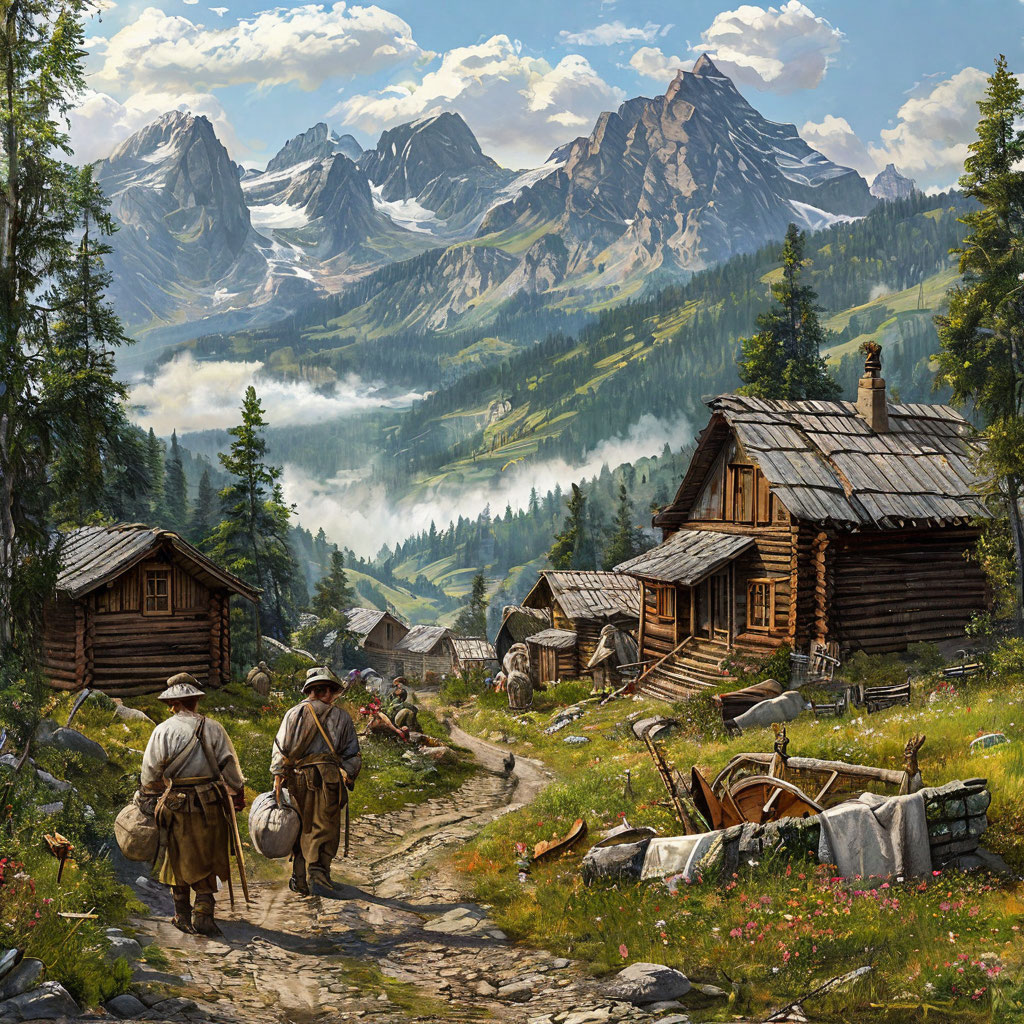
The Growth of Mining Towns in the Southern Urals
Imagine a land where the mountains pulse with the heartbeat of industry, where rivers once teeming with fish now carry the weight of iron and coal. This is the Southern Urals—a region that, in the 19th century, transformed from a quiet wilderness into a bustling hub of mining activity. Let’s embark on a journey through time to explore how these mining towns emerged, flourished, and left an indelible mark on the landscape and its people.
The Dawn of Industrialization
In the early 1700s, the Southern Urals were a rugged frontier, sparsely populated and rich in natural resources. The Russian Empire, eager to harness these riches, began establishing mining factories, known as “gornozavods,” to extract iron, copper, and other minerals. These factories were more than just industrial sites; they were fortified settlements designed to protect against local uprisings and to manage the labor force, which often included serfs and convicts. The first of these, the Nevyansky and Kamensky plants, were founded in 1699-1700, marking the birth of Ural metallurgy. ([en.wikipedia.org](https://en.wikipedia.org/wiki/History_of_metallurgy_in_the_Urals?utm_source=openai))
The Rise of Mining Towns
As the 18th century progressed, the mining industry in the Southern Urals expanded rapidly. Towns like Kyshtym, Gubakha, and Kizel sprang up around these factories, each with its unique story.
Kyshtym
Established in 1757 by the Demidov family, Kyshtym began as a center for cast iron and steel production. The town’s emblem features the Kyshtym Manor House, a Palladian residence of Nikita Demidov Jr. Over time, Kyshtym attracted foreign investment, including American and British interests, leading to modernization and increased production. By 1912, the town was a thriving industrial center, producing millions of pounds of copper annually. ([en.wikipedia.org](https://en.wikipedia.org/wiki/Kyshtym?utm_source=openai))
Gubakha
Founded in 1755, Gubakha’s growth was closely tied to the discovery of iron ore in the region. Initially a small settlement, it expanded rapidly with the construction of a railway in 1879, which facilitated the transport of coal and iron. By the early 20th century, Gubakha had become a significant industrial hub, contributing to the region’s reputation as a leader in metallurgy. ([en.wikipedia.org](https://en.wikipedia.org/wiki/Gubakha?utm_source=openai))
Kizel
In 1788, the Kizel River dam was completed, leading to the establishment of Kizel as a mining town. The Kizelovsky basin became a major coal-producing area, with production reaching 21.1 million poods by 1900. The Abamelek-Lazarevs family, prominent mine owners, introduced technical innovations, including partial mechanization and electrification, setting Kizel apart as a modern mining center. ([en.wikipedia.org](https://en.wikipedia.org/wiki/Kizel?utm_source=openai))
The Social Fabric of Mining Towns
The rapid industrialization of the Southern Urals brought about profound social changes. These mining towns were melting pots of diverse cultures and backgrounds. Workers from various parts of Russia, and even Europe, converged in these towns, leading to a unique blend of traditions, languages, and customs. The harsh working conditions in the mines fostered a strong sense of community and solidarity among the workers, who often faced long hours and dangerous tasks. Despite the challenges, these towns became vibrant centers of culture, with theaters, schools, and social clubs emerging to serve the growing population. ([en.wikipedia.org](https://en.wikipedia.org/wiki/History_of_metallurgy_in_the_Urals?utm_source=openai))
Challenges and Decline
By the mid-19th century, the Southern Urals faced significant challenges. The depletion of nearby forests led to a shortage of wood for fuel, and the introduction of steam engines was slow, hindering industrial efficiency. Additionally, the global market was flooded with cheaper foreign metals, leading to a decline in demand for Russian products. These factors contributed to economic hardships and a gradual decline in the prominence of the Southern Urals as a mining powerhouse. ([en.wikipedia.org](https://en.wikipedia.org/wiki/History_of_metallurgy_in_the_Urals?utm_source=openai))
Legacy and Modern Times
Today, the remnants of these mining towns stand as testaments to a bygone era. While some have faded into obscurity, others have evolved into modern cities, preserving their rich industrial heritage. The Southern Urals continue to be a region of natural beauty and cultural significance, attracting visitors interested in exploring its history and landscapes. The legacy of the mining towns serves as a reminder of human ingenuity and the transformative power of industry. ([en.wikipedia.org](https://en.wikipedia.org/wiki/History_of_metallurgy_in_the_Urals?utm_source=openai))
As we reflect on the growth of mining towns in the Southern Urals, we gain insight into the complexities of industrialization and its impact on society. These towns were not just centers of production; they were communities that adapted, thrived, and left an enduring imprint on the history of Russia.
