
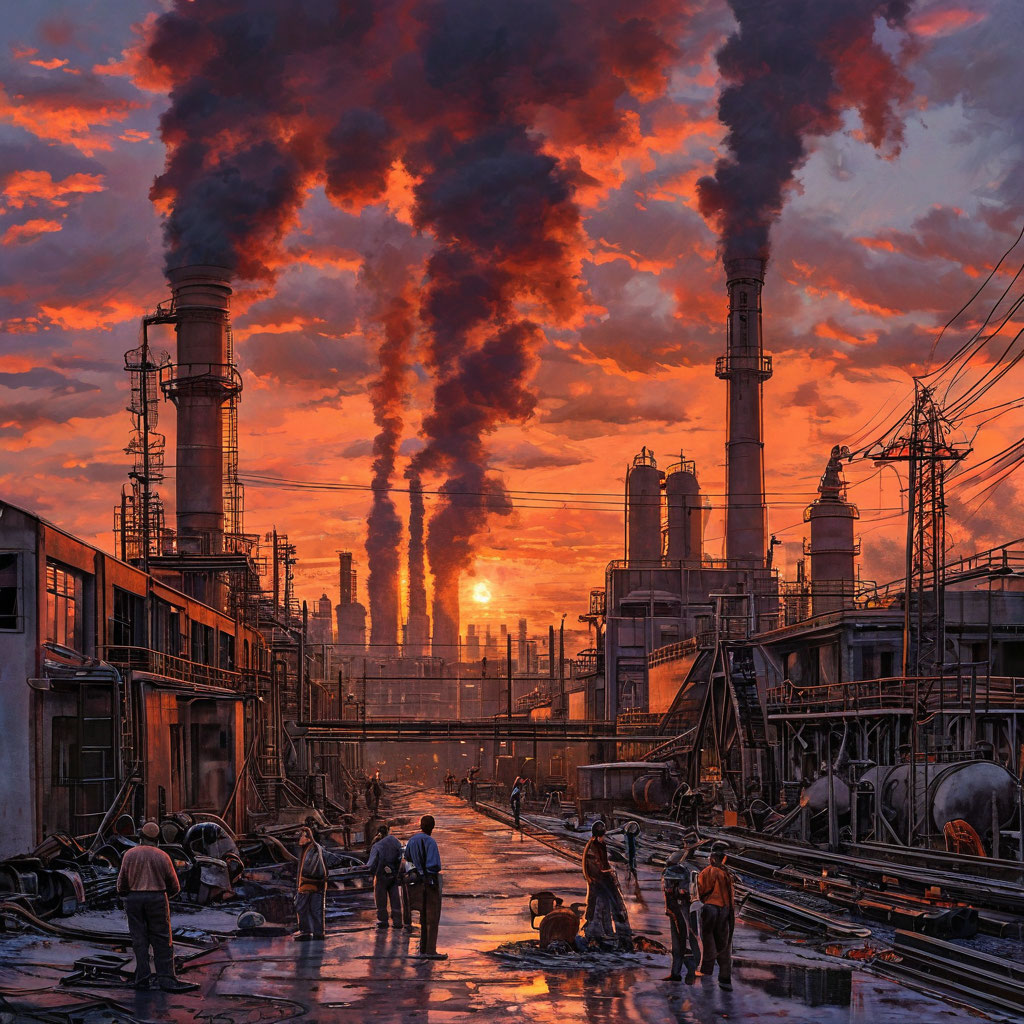
The Establishment of the Nadezhdinsky Plant: A Tale of Vision, Innovation, and Transformation
Imagine a dense Ural forest in the late 19th century, where the rhythmic sounds of nature are about to be joined by the hum of industry. This is the backdrop to the story of the Nadezhdinsky Plant, a testament to human ingenuity and the relentless pursuit of progress.
The Visionaries Behind the Venture
In the 1890s, Russia was on the brink of a monumental infrastructure project—the construction of the Siberian Railway, designed to connect Central Russia with the Far East. Recognizing the need for a reliable source of rails, the influential Polovtsov family, prominent in the Theological District of the Middle Urals, embarked on a bold endeavor. They envisioned a metallurgical plant that would not only supply the state with essential materials but also stimulate regional development.
Guided by the expertise of mining engineer Auerbach, the Polovtsovs secured a contract with the Siberian Road Administration, which agreed to purchase 5 million poods of rails. This agreement laid the financial foundation for the plant’s construction, with an initial deposit of 2.5 million rubles. The ambitious project was set into motion.
Breaking Ground in the Taiga
In 1893, construction began in earnest. A site was chosen near the Kakva River, surrounded by dense forests, approximately 3.5 versts from the Bogoslovsky-Sosvenskaya railway. The location was remote, yet strategically selected to harness the abundant natural resources and to establish a self-sufficient industrial hub. By the winter of 1894, a bustling town had emerged, aptly named Serov, serving as the heart of this industrial revolution.
The Architects of Industry
The design and construction of the plant were entrusted to a team of distinguished engineers:
- A.A. Auerbach: Oversaw the overall structural concept.
- F.F. Shtark: Calculated the metal structures.
- A.V. Nikitin: Managed the blast furnaces.
- R.R. Tonkov: Designed the open-hearth furnaces.
- A.I. Meshchersky: Developed the site and rolling mill.
Each played a pivotal role in transforming a vision into a tangible reality, laying the groundwork for what would become a cornerstone of Russian metallurgy.
From Humble Beginnings to Industrial Powerhouse
The plant’s journey was marked by both triumphs and challenges. The first pood of metal was smelted on January 19, 1896, and the inaugural batch of rails was produced on March 3 of the same year. Initially, the plant focused on rail production, but over time, it diversified its output to include high-quality iron, refractory products, and shell blanks, catering to a wide array of industrial needs.
However, the path was not without obstacles. By 1900, the plant faced financial difficulties, leading to wage arrears and worker unrest. Despite these challenges, the plant continued to evolve, installing powerful rolling mills and expanding its workforce to meet the growing demands of the industry.
Adapting to the Times
The onset of World War I necessitated a shift in production priorities. The plant redirected its efforts towards manufacturing barbed wire, shells, and gun blanks, contributing significantly to the war effort. The acquisition of equipment from the Riga Mechanical Plant further enhanced its capabilities, allowing for increased production and technological advancement.
Nationalization and New Horizons
In the aftermath of the 1917 revolution, the plant underwent nationalization, becoming a state-owned enterprise. The 1930s marked a significant transformation as the plant reoriented its focus from producing rails and low-grade products to high-quality and specialized steels. This shift included the production of steel blanks, rolled products, and even steel ball bearings, positioning the plant as a leader in metallurgical innovation.
Resilience Through Adversity
The Great Patriotic War (World War II) tested the plant’s resilience. Over four years, production increased by 1.7 times, and workers developed approximately 100 new grades of high-quality alloyed steel. The plant also pioneered the smelting of ferrochromium and ferrosilicon, technologies that were firsts in the world, underscoring its critical role in supporting the defense industry and the nation’s economy.
Post-War Renaissance
After the war, the plant embarked on a series of upgrades and expansions. In 1946, an agglomeration factory was built, and a second belt of a cast-iron machine was installed. By 1960, the plant was connected to the Unified Energy System of the USSR, ensuring a stable and efficient power supply. These developments not only enhanced production capacity but also improved the plant’s environmental footprint.
Modernization and Global Integration
The 1970s and 1980s saw the plant diversifying its production, supplying special alloys and steels to domestic automotive and aerospace industries. In 1985, a scrap metal recycling facility was commissioned, reflecting a commitment to sustainability and resource efficiency. The early 1990s brought privatization, and in 2000, the plant became part of UMMC-Holding, a move that facilitated large-scale reconstruction and modernization.
A Legacy of Innovation
Today, the Nadezhdinsky Plant continues to produce a wide range of products, including 320 types of steel and more than 400 types of rolled products. Its main directions include alloyed steels, pig iron, and various blanks. The plant’s journey from a modest rail producer to a diversified metallurgical powerhouse is a testament to the vision, resilience, and innovative spirit of its founders and workers.
The story of the Nadezhdinsky Plant is not just about steel and machinery; it’s about the people who dared to dream, the challenges they overcame, and the legacy they left behind. It’s a narrative that intertwines human ambition with the raw materials of the earth, forging a path toward progress and prosperity.
As you reflect on this journey, consider the profound impact of industrialization on shaping the modern world. The Nadezhdinsky Plant stands as a monument to human ingenuity, a beacon of how vision and determination can transform a landscape and a nation.
