
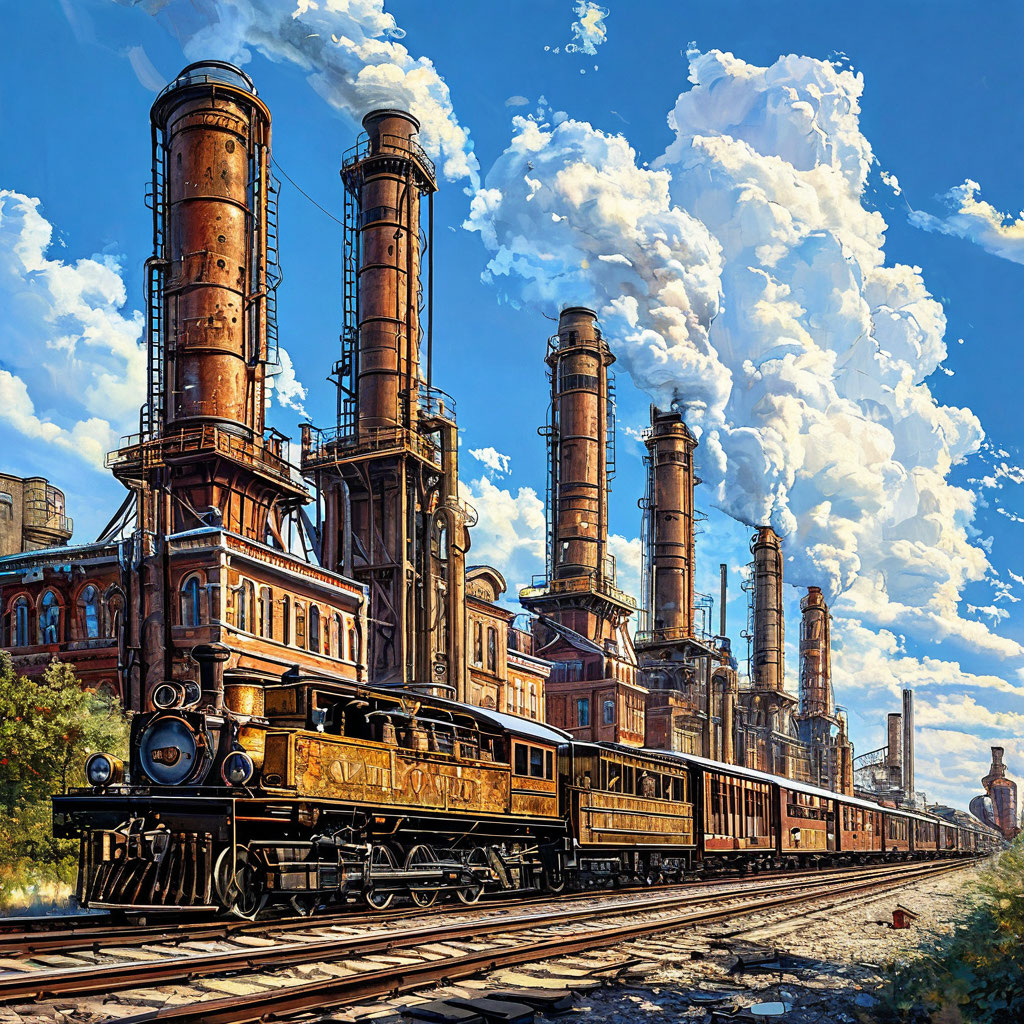
The Introduction of Steam Power in Ural Factories
Imagine a time when the Ural Mountains echoed with the rhythmic pounding of water wheels, and the air was thick with the scent of burning wood. This was the industrial landscape of the Ural region in the early 19th century. But then, a revolutionary force began to reshape this scene: steam power.
The Dawn of Steam in the Ural Industry
In the late 18th century, the Ural factories were heavily reliant on water wheels and manual labor. The introduction of steam engines marked a pivotal shift. The first steam-powered machines appeared in the region’s factories in the final years of the 18th century. Initially, these machines were prone to breakdowns and consumed vast amounts of wood, leading to a slow adoption rate. However, by the 1830s, steam engines had become more reliable, and specialized machine-building enterprises emerged to design, assemble, and repair these engines. This period also saw the construction of the first Russian locomotive by the father-son duo Efim and Miron Cherepanov in 1834, a testament to the region’s innovative spirit. ([ru.wikipedia.org](https://ru.wikipedia.org/wiki/%D0%98%D1%81%D1%82%D0%BE%D1%80%D0%B8%D1%8F_%D0%BC%D0%B5%D1%82%D0%B0%D0%BB%D0%BB%D1%83%D1%80%D0%B3%D0%B8%D0%B8_%D0%A3%D1%80%D0%B0%D0%BB%D0%B0?utm_source=openai))
Steam Power in Metallurgical Plants
The metallurgical industry was among the first to embrace steam power. The Vyisky Metallurgical Plant, established in 1722, was a pioneer in this transition. In 1834, the Cherepanovs constructed the first Russian steam locomotive here, revolutionizing the transportation of iron ore. By 1840, the plant had 73 steam engines, signaling a significant shift towards mechanization. ([ru.wikipedia.org](https://ru.wikipedia.org/wiki/%D0%92%D1%8B%D0%B9%D1%81%D0%BA%D0%B8%D0%B9_%D0%BC%D0%B5%D1%82%D0%B0%D0%BB%D0%BB%D1%83%D1%80%D0%B3%D0%B8%D1%87%D0%B5%D1%81%D0%BA%D0%B8%D0%B9_%D0%B7%D0%B0%D0%B2%D0%BE%D0%B4?utm_source=openai))
Similarly, the Chyormozsky Plant, operational since the 18th century, began integrating steam power in the mid-19th century. In 1877, the plant’s water-powered rolling mill was converted to steam, enhancing efficiency and production capacity. ([ru.wikipedia.org](https://ru.wikipedia.org/wiki/%D0%A7%D1%91%D1%80%D0%BC%D0%BE%D0%B7%D1%81%D0%BA%D0%B8%D0%B9_%D0%B7%D0%B0%D0%B2%D0%BE%D0%B4?utm_source=openai))
Steam Power in Flour Mills
The introduction of steam power wasn’t limited to metallurgy. Flour mills, essential to the region’s economy, also underwent significant transformations. The Simanov-Makarov Mill, established in 1884 in Yekaterinburg, was among the first to adopt steam engines. This six-story stone building, connected to a grain storage facility, could process up to 700,000 poods of wheat annually, employing 50 workers. ([ru.wikipedia.org](https://ru.wikipedia.org/wiki/%D0%9C%D0%B5%D0%BB%D1%8C%D0%BD%D0%B8%D1%86%D0%B0_%D0%A1%D0%B8%D0%BC%D0%B0%D0%BD%D0%BE%D0%B2%D0%B0_%E2%80%94_%D0%9C%D0%B0%D0%BA%D0%B0%D1%80%D0%BE%D0%B2%D1%8B%D1%85?utm_source=openai))
The Broader Impact of Steam Power
The widespread adoption of steam power in the Ural factories had profound effects. It led to increased production, reduced reliance on manual labor, and spurred technological innovations. The region’s factories became more competitive, both domestically and internationally. The integration of steam engines also paved the way for the development of railways, further enhancing transportation and trade.
Challenges and Adaptations
Despite its advantages, the shift to steam power was not without challenges. The initial costs of importing and installing steam engines were high. Additionally, the Ural region faced a shortage of skilled labor to operate and maintain these machines. Over time, local engineers and workers acquired the necessary skills, and the region developed a robust industrial workforce.
Conclusion
The introduction of steam power in the Ural factories was a transformative event that reshaped the region’s industrial landscape. It marked the beginning of a new era, characterized by innovation, increased productivity, and economic growth. The legacy of this transformation is still evident in the Ural’s industrial heritage, a testament to the resilience and ingenuity of its people.
