
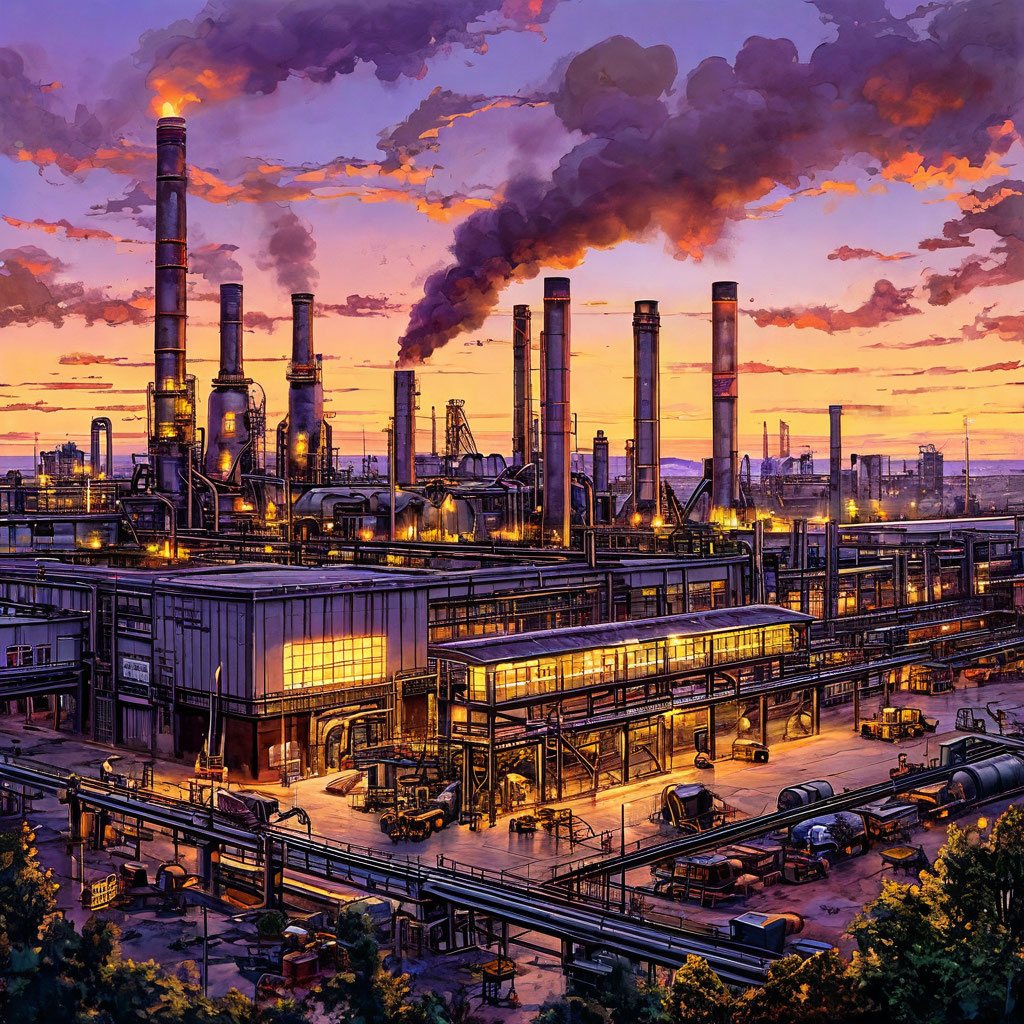
The Development of Machine-Building Industry in the Urals
Imagine a vast expanse of rugged mountains and dense forests, stretching across the heart of Russia. This is the Ural region, a land rich in natural resources and steeped in history. In the 19th century, the Urals underwent a remarkable transformation, evolving from a predominantly agrarian society into a powerhouse of machine-building industry. Let’s embark on a journey through time to explore how this industrial revolution unfolded in the Urals.
The Dawn of Industrialization
In the early 1800s, the Urals were known for their mining and metallurgical industries. However, the need for advanced machinery to process the abundant minerals and ores led to the establishment of machine-building enterprises. The first significant step was the founding of the Votkinsk Machine Building Plant in 1754. Located near the Kama River, this plant was strategically positioned to utilize the nearby forests for fuel and the river for transportation. Initially, it produced anchors and other maritime equipment, but over time, it expanded its production to include a variety of machinery essential for the mining and metallurgical sectors. By 1811, the plant was manufacturing steel and cast iron, marking a significant advancement in the region’s industrial capabilities.
The Rise of Heavy Machinery
The mid-19th century saw the emergence of larger-scale machine-building enterprises. The Ural Heavy Machinery Plant, known as Uralmash, was established in 1933 in Yekaterinburg. This plant became a cornerstone of the Soviet Union’s industrialization efforts, producing equipment for the mining and metallurgical industries. During World War II, Uralmash played a pivotal role by manufacturing tanks and other military vehicles, contributing significantly to the Soviet war effort. Post-war, the plant expanded its production to include dragline excavators and drilling rigs, further solidifying its position in the heavy machinery sector.
The Tractor Revolution
In the 1930s, the Soviet Union recognized the need for mechanization in agriculture to boost productivity. This vision led to the establishment of the Chelyabinsk Tractor Plant in 1933. Located in Chelyabinsk, the plant began by producing the C-60 tractor, a 60-horsepower tracked vehicle. By 1940, it had produced 100,000 tractors, revolutionizing Soviet agriculture. During World War II, the plant’s capabilities expanded to include the production of tanks and military vehicles, earning it the nickname “Tankograd” or “Tank City.” After the war, the plant returned to its agricultural roots, continuing to produce tractors and other heavy machinery essential for the Soviet economy.
Post-War Expansion and Innovation
The post-war period was marked by rapid industrial growth and innovation. The Ural Automobile Plant, established in 1941 in Miass, began by producing components for military vehicles. By 1943, it had transformed into a full-fledged automobile plant, producing trucks and other vehicles vital for the Soviet infrastructure. The plant’s strategic location near the Trans-Siberian Railway facilitated the efficient distribution of its products across the vast Soviet Union.
Another significant development was the establishment of Uralvagonzavod in 1936 in Nizhny Tagil. Initially focused on producing railway cars, the plant expanded its production to include tanks, artillery, and other military vehicles. Over time, it became one of the largest scientific and industrial complexes in Russia, contributing to both civilian and military sectors.
The Legacy of the Ural Machine-Building Industry
The machine-building industry in the Urals has left an indelible mark on Russia’s industrial landscape. The region’s factories not only supplied essential machinery for various sectors but also fostered a culture of innovation and resilience. The workers and engineers of the Urals demonstrated an unwavering commitment to progress, overcoming challenges and contributing to the Soviet Union’s status as a global industrial power.
Today, the legacy of the Ural machine-building industry continues to influence modern manufacturing practices. The region’s emphasis on heavy machinery, precision engineering, and industrial design has paved the way for contemporary advancements in these fields. Moreover, the historical significance of these factories serves as a testament to the transformative power of industrialization and the enduring spirit of the Ural people.
In conclusion, the development of the machine-building industry in the Urals is a story of vision, determination, and innovation. From humble beginnings to becoming a cornerstone of Soviet industrial might, the Urals have played a pivotal role in shaping Russia’s industrial heritage. As we reflect on this journey, we gain a deeper appreciation for the complexities and triumphs of industrialization, not only in the Urals but across the globe.
