
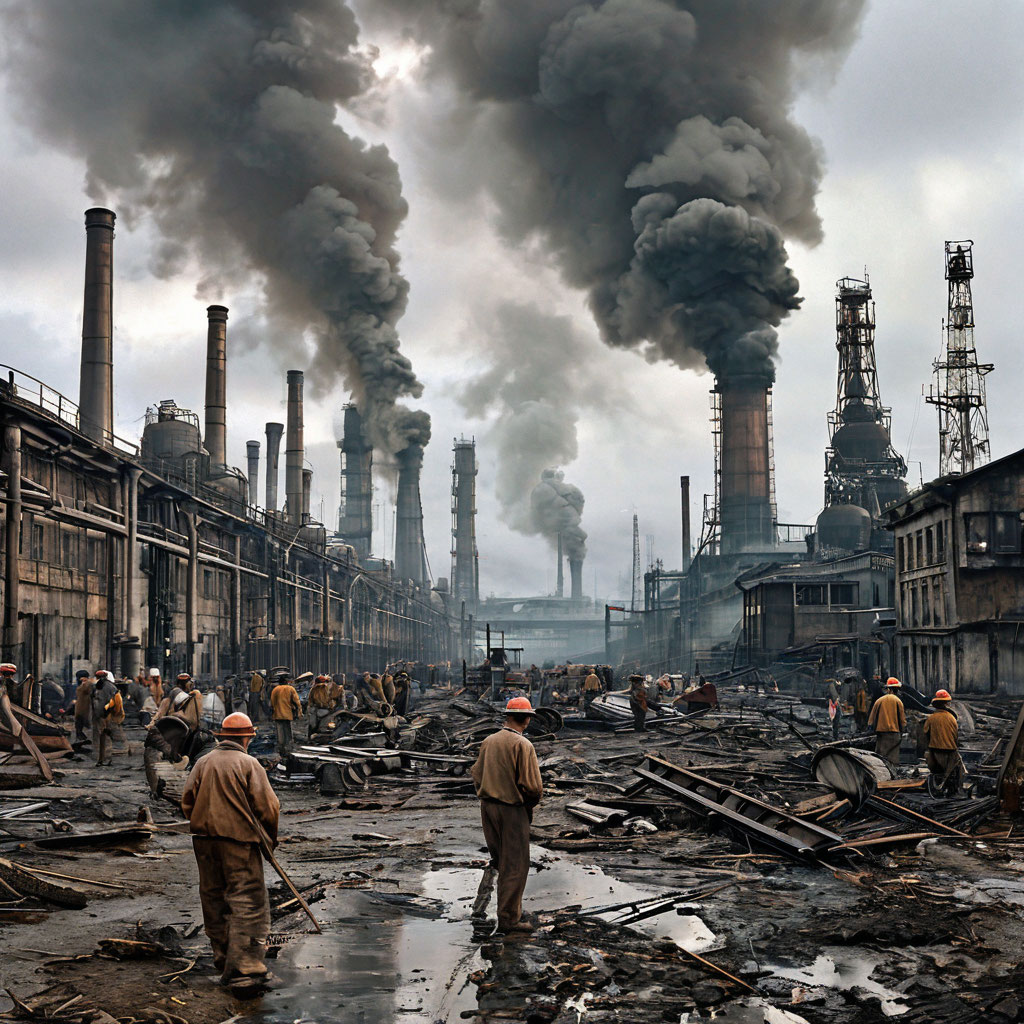
The Industrialization of the Urals During the First Five-Year Plan
Imagine a vast, rugged region stretching across the heart of Russia, where dense forests and towering mountains once dominated the landscape. This is the Ural Mountains, a place rich in natural resources and steeped in history. In the late 1920s, the Soviet Union embarked on an ambitious journey to transform this region—and the entire nation—into an industrial powerhouse. This endeavor was known as the First Five-Year Plan, a bold initiative that reshaped the Urals and left an indelible mark on its people and industries.
The Dawn of Industrialization
In 1928, Joseph Stalin introduced the First Five-Year Plan, aiming to rapidly industrialize the Soviet economy. The plan set ambitious targets, including a 250% increase in overall industrial development and a 330% expansion in heavy industry alone. The Urals, with their abundant natural resources, were poised to play a pivotal role in this transformation. The plan’s focus on heavy industry led to the establishment of several key industrial centers in the region, including Magnitogorsk, Chelyabinsk, and Sverdlovsk (now Yekaterinburg). These cities became the heart of Soviet industrialization, symbolizing the nation’s drive toward modernization. ([ibiblio.org](https://www.ibiblio.org/expo/soviet.exhibit/collect.html?utm_source=openai))
Magnitogorsk: The Steel Giant
Among the most iconic industrial centers was Magnitogorsk, a city that rose from the Ural wilderness to become a symbol of Soviet industrial might. Founded in 1743, Magnitogorsk was transformed in the early 1930s into a one-industry town dedicated to steel production. The Magnitogorsk Iron and Steel Works (MMK) was established as part of the First Five-Year Plan, with the goal of making it the largest steel producer in Russia, rivaling the United States in output. By 1932, the pig iron output of Magnitogorsk accounted for nearly 10% of the total output in the Soviet Union, and its fraction further grew during the latter years, reaching over 1.2 million tons by 1934. ([en.wikipedia.org](https://en.wikipedia.org/wiki/Magnitogorsk_Iron_and_Steel_Works?utm_source=openai))
Chelyabinsk: The Tank City
In contrast, Chelyabinsk became known as “Tankograd” or “Tank City” due to its significant role in tank production during World War II. The Chelyabinsk Tractor Plant, established in 1933, initially produced tractors but later shifted to manufacturing tanks and other military equipment. By 1945, the plant had produced 18,000 tanks and 48,500 tank diesel engines, contributing significantly to the Soviet war effort. ([en.wikipedia.org](https://en.wikipedia.org/wiki/Chelyabinsk_Tractor_Plant?utm_source=openai))
The Human Cost of Industrialization
However, the rapid industrialization came at a significant human cost. The construction of factories and infrastructure often relied on forced labor, including prisoners from the Gulag system. Workers faced grueling conditions, with inadequate housing, food shortages, and harsh working environments. The drive to meet production targets led to the exploitation of labor, with workers subjected to intense pressure to fulfill unrealistic quotas. This period also saw the collectivization of agriculture, which disrupted traditional farming practices and led to widespread famine in some areas. ([rbth.com](https://www.rbth.com/history/332851-soviet-five-year-plans-cost?utm_source=openai))
Legacy and Transformation
Despite the challenges, the First Five-Year Plan laid the foundation for the Soviet Union’s industrial prowess. The Urals, once a remote and underdeveloped region, emerged as a central hub of Soviet industry. The cities that sprang up during this period became centers of innovation and production, contributing significantly to the nation’s economic growth. The industrialization of the Urals also spurred urbanization, with millions of peasants migrating from rural areas to cities in search of work. This shift transformed the social fabric of the region, leading to the development of a new urban working class. ([en.wikipedia.org](https://en.wikipedia.org/wiki/Industrialization_in_the_Soviet_Union?utm_source=openai))
Conclusion
The industrialization of the Urals during the First Five-Year Plan was a defining chapter in Soviet history. It was a time of monumental change, marked by both remarkable achievements and profound human suffering. The legacy of this era is evident in the industrial cities that continue to thrive in the Urals today. Understanding this period offers valuable insights into the complexities of rapid industrialization and its lasting impact on society and culture.
