
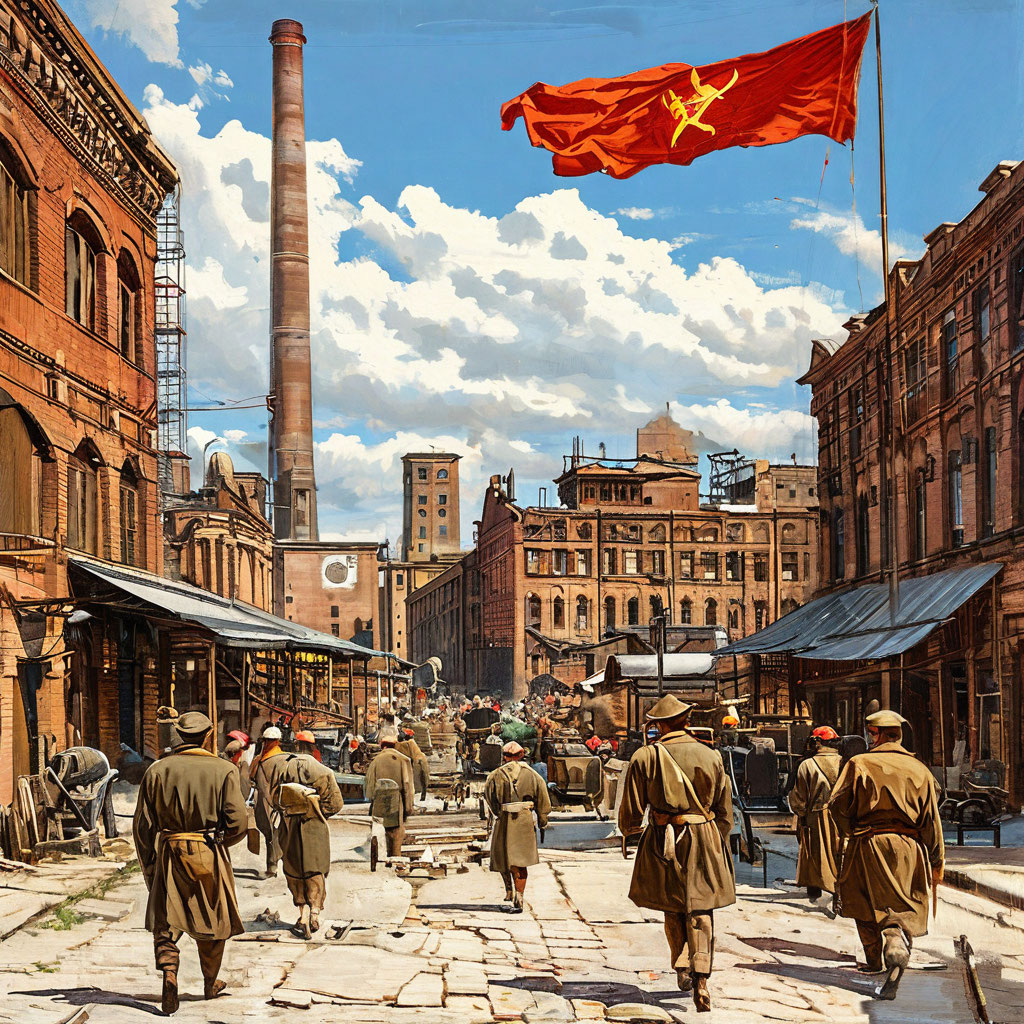
The Transformation of Yekaterinburg into Sverdlovsk in 1924
Imagine a city nestled between Europe and Asia, a bustling hub of industry and culture. This was Yekaterinburg, a city with a rich history and a pivotal role in Russia’s industrial landscape. However, in 1924, this city underwent a significant transformation that would reshape its identity and future.
The Early 20th Century: A City in Flux
Founded in 1723, Yekaterinburg had long been a center of mining and metallurgy. By the early 20th century, it had evolved into a vibrant urban center, playing a crucial role in Russia’s industrialization. The city’s strategic location made it a vital link between Europe and Asia, fostering economic growth and cultural exchange.
However, the Russian Revolution of 1917 and the subsequent Civil War brought upheaval and change. Amidst this turmoil, Yekaterinburg emerged as a focal point for revolutionary activity, reflecting the broader shifts occurring across the nation.
The Rise of Yakov Sverdlov
In the midst of this revolutionary fervor, one figure stood out: Yakov Mikhailovich Sverdlov. A prominent Bolshevik leader, Sverdlov played a pivotal role in the early Soviet government. He was instrumental in organizing the October Revolution and served as the chairman of the All-Russian Central Executive Committee. His leadership and contributions to the Bolshevik cause were highly regarded by his contemporaries.
Vladimir Lenin, the leader of the Bolshevik Party, praised Sverdlov’s dedication and organizational skills, referring to him as “the most perfectly complete type of professional revolutionary.” This recognition underscored Sverdlov’s significant impact on the revolutionary movement and the formation of the Soviet state.
The Renaming of Yekaterinburg to Sverdlovsk
In 1924, the Soviet government embarked on a campaign to honor revolutionary figures by renaming cities and streets across the country. Yekaterinburg was among the cities selected for this transformation. The city council decided to rename Yekaterinburg to Sverdlovsk, paying homage to Yakov Sverdlov’s contributions to the revolution and the establishment of the Soviet state.
This decision was part of a broader trend during the 1920s and 1930s, where many cities and towns were renamed to reflect the new Soviet ideology. For instance, Petrograd became Leningrad, Tsaritsyn was renamed Stalingrad, and Simbirsk transformed into Ulyanovsk. These changes were intended to erase the old imperial past and celebrate the achievements of the Bolshevik leaders.
The Impact of the Renaming
The renaming of Yekaterinburg to Sverdlovsk was more than just a change of name; it marked a new era for the city. During the Soviet period, Sverdlovsk underwent rapid industrialization, becoming one of the largest industrial centers in Russia. The city saw the construction of massive machine-building and metallurgical plants, including the Ural Heavy Machine-Building Plant (UZTM) and the Ural Power Engineering Plant. These developments transformed Sverdlovsk into a powerhouse of Soviet industry.
Moreover, the renaming reflected the Soviet government’s efforts to reshape the cultural and social fabric of the nation. By honoring figures like Sverdlov, the government aimed to promote the values of the revolution and solidify the new Soviet identity. The renaming was a symbolic act, signaling a break from the past and a commitment to the future envisioned by the Bolsheviks.
The Legacy of Sverdlovsk
The legacy of Sverdlovsk is multifaceted. On one hand, the city’s industrial achievements during this period were significant, contributing to the Soviet Union’s economic strength. On the other hand, the renaming and the associated cultural shifts left a lasting impact on the city’s identity and collective memory.
In 1991, following the dissolution of the Soviet Union, the city reverted to its original name, Yekaterinburg. This change was part of a broader movement across Russia to reclaim historical names and identities. The return to Yekaterinburg was seen as a way to honor the city’s rich history and to move beyond the Soviet era.
Conclusion
The transformation of Yekaterinburg into Sverdlovsk in 1924 was a significant event that encapsulated the broader changes occurring in Russia during the early Soviet period. It was a reflection of the Soviet government’s efforts to reshape the nation’s identity and honor its revolutionary leaders. The legacy of this transformation continues to influence Yekaterinburg today, serving as a testament to the city’s resilience and its pivotal role in Russia’s history.
For more insights into the history of Yekaterinburg and its transformation, you can explore the following resources:
