
Development of Uralmash: The Giant of Soviet Industry
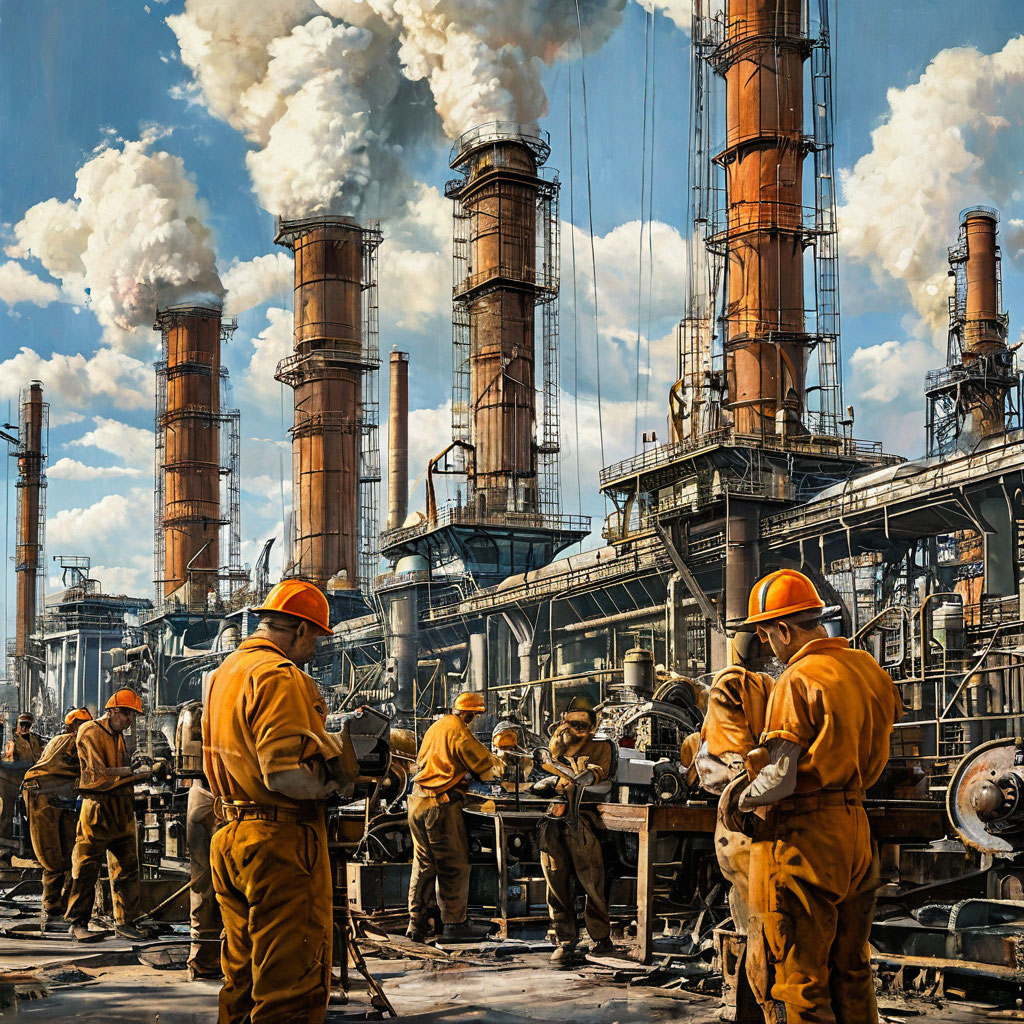
Imagine a colossal factory rising from the Ural Mountains, its smokestacks reaching for the sky, symbolizing the might of Soviet industry. This was Uralmash, a titan that not only transformed the Soviet industrial landscape but also played a pivotal role in shaping the nation’s destiny. Let’s embark on a journey through time to explore the evolution of this industrial giant.
The Birth of a Giant
In the late 1920s, the Soviet Union embarked on an ambitious path of industrialization, aiming to catch up with the West. Recognizing the need for advanced machinery to fuel this growth, the government decided to establish a plant dedicated to producing heavy machinery. Thus, the Ural Heavy Machinery Plant, commonly known as Uralmash, was born. Construction began in 1926, and by 1933, the plant was operational, marking a significant milestone in Soviet industrial history. ([en.wikipedia.org](https://en.wikipedia.org/wiki/Uralmash?utm_source=openai))
Forging the Arsenal of the Soviet Union
As the 1930s progressed, Uralmash became synonymous with innovation and resilience. The plant’s engineers and workers were not just building machines; they were crafting the very tools that would define Soviet strength. From blast furnaces to rolling mills, Uralmash’s products were the backbone of the nation’s metallurgical industry. ([en.wikipedia.org](https://en.wikipedia.org/wiki/Uralmash?utm_source=openai))
Steel Giants and the War Effort
The outbreak of World War II in 1941 tested the mettle of Uralmash. The plant swiftly reoriented its production lines to meet the demands of war. By 1942, Uralmash was producing T-34 tanks and SU-122 assault guns, weapons that would become legends on the battlefield. The self-propelled gun mounts built at Uralmash demonstrated their effectiveness on the battlefield as a successful combination of maneuverability of T-34 tanks and huge firepower of ordnance pieces. ([en.wikipedia.org](https://en.wikipedia.org/wiki/Uralmash?utm_source=openai))
Post-War Renaissance and Innovation
After the war, Uralmash underwent a remarkable transformation. The plant shifted its focus back to civilian production, introducing groundbreaking machinery that would revolutionize various industries. In 1947, Uralmash began the serial production of dragline excavators with buckets ranging from 3 to 5 cubic meters, a feat that earned its engineers the State Prize of the USSR in 1948. ([ru.wikipedia.org](https://ru.wikipedia.org/wiki/%D0%A3%D1%80%D0%B0%D0%BB%D0%BC%D0%B0%D1%88%D0%B7%D0%B0%D0%B2%D0%BE%D0%B4?utm_source=openai))
Uralmash’s Global Footprint
Uralmash’s influence wasn’t confined to the Soviet Union. Its machinery found homes in mines and factories across the globe. The plant’s dragline excavators, for instance, became a common sight in open-pit mining operations worldwide. This global reach underscored Uralmash’s reputation as a leader in heavy machinery manufacturing. ([en.wikipedia.org](https://en.wikipedia.org/wiki/Uralmash?utm_source=openai))
Legacy and Transformation
As the Soviet Union dissolved, Uralmash faced new challenges. The plant underwent several transformations, including privatization and restructuring. Despite these changes, the legacy of Uralmash as a cornerstone of Soviet industry endures. Today, the name “Uralmash” is synonymous with industrial prowess and innovation, a testament to its pivotal role in shaping the industrial landscape of the 20th century. ([en.wikipedia.org](https://en.wikipedia.org/wiki/Uralmash?utm_source=openai))
Uralmash’s journey from a fledgling factory to an industrial giant mirrors the Soviet Union’s own evolution. It stands as a testament to human ingenuity, resilience, and the relentless pursuit of progress. The story of Uralmash is not just about machines; it’s about the people who built them, the challenges they overcame, and the indelible mark they left on history.
