
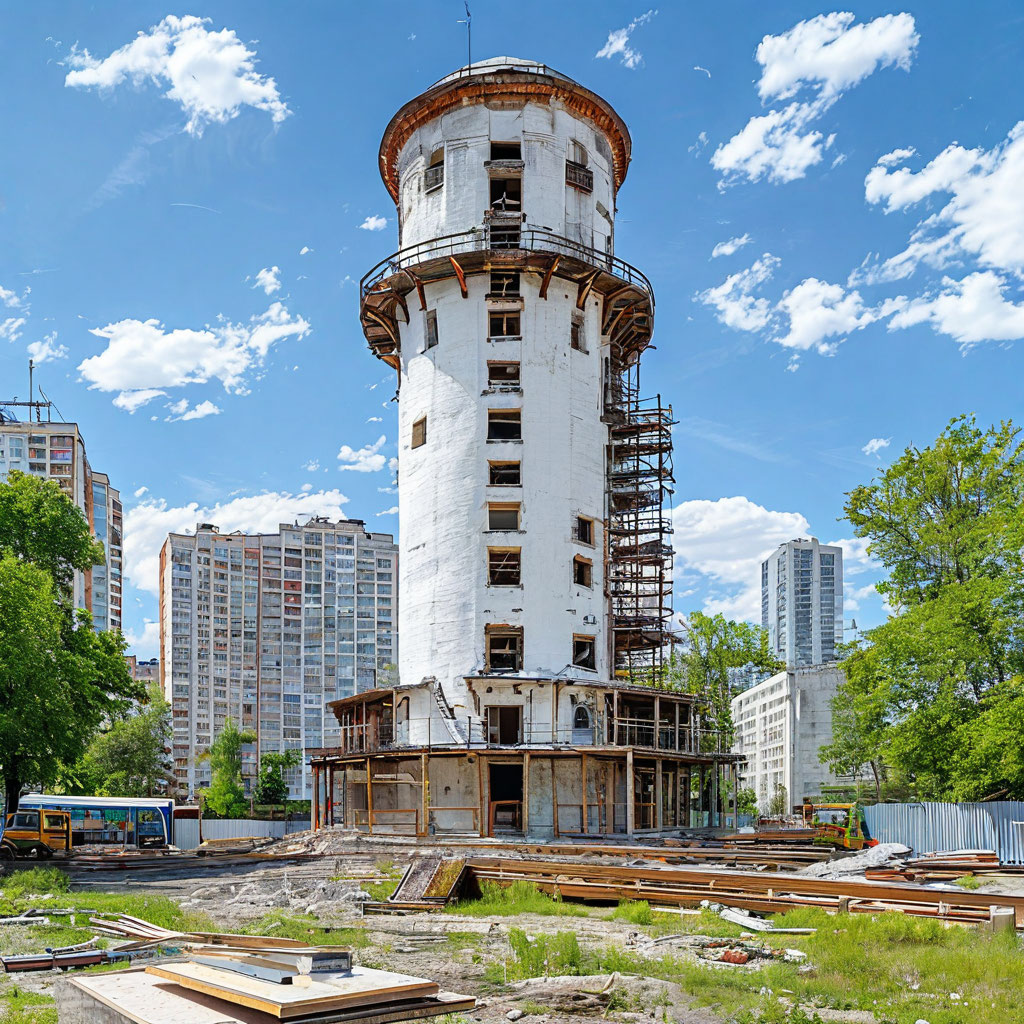
The White Tower of Yekaterinburg: A Testament to Resilience and Revival
Imagine a towering structure, its white silhouette piercing the skyline of Yekaterinburg, standing as a silent witness to the city’s industrial past and architectural evolution. This is the White Tower, a monument that has undergone a remarkable transformation from neglect to cultural renaissance. Let’s delve into its history, significance, and the inspiring journey of its restoration.
A Glimpse into the Past: The Birth of the White Tower
Constructed between 1929 and 1931, the White Tower was designed by architect Moisey Reisher. It served as a water tower for the Ural Heavy Machinery Plant (UZTM), supplying water to the plant and the surrounding social city. The tower’s design is a prime example of Soviet constructivism, characterized by its functional form and minimalist aesthetics. Its monolithic concrete structure was a testament to the industrial prowess of the era, making it one of the first concrete buildings in Sverdlovsk (now Yekaterinburg). Over time, the White Tower became an unofficial symbol of the Uralmash district, embodying the spirit of Soviet industrialization. ([ru.wikipedia.org](https://ru.wikipedia.org/wiki/%D0%91%D0%B5%D0%BB%D0%B0%D1%8F_%D0%B1%D0%B0%D1%88%D0%BD%D1%8F_%28%D0%95%D0%BA%D0%B0%D1%82%D0%B5%D1%80%D0%B8%D0%BD%D0%B1%D1%83%D1%80%D0%B3%29?utm_source=openai))
The Decline: From Vital Infrastructure to Abandoned Monument
As the city’s water supply system modernized in the 1960s, the White Tower was decommissioned. Without a clear purpose, it fell into disrepair, becoming a neglected relic of the past. By the 1990s, the tower was abandoned, its once-pristine white facade tarnished by time and neglect. The structure faced the threat of demolition, and its future seemed uncertain. ([ru.wikipedia.org](https://ru.wikipedia.org/wiki/%D0%91%D0%B5%D0%BB%D0%B0%D1%8F_%D0%B1%D0%B0%D1%88%D0%BD%D1%8F_%28%D0%95%D0%BA%D0%B0%D1%82%D0%B5%D1%80%D0%B8%D0%BD%D0%B1%D1%83%D1%80%D0%B3%29?utm_source=openai))
The Awakening: A Community’s Commitment to Preservation
In 2012, a group of young architects and activists, known as Podelniki, took a bold step to save the White Tower. Recognizing its historical and architectural value, they initiated a campaign to restore the monument. Their mission was not just to preserve a building but to breathe new life into it, transforming it into a vibrant cultural hub for the community. ([tass.ru](https://tass.ru/v-strane/6352772?utm_source=openai))
Initial Steps: Cleaning and Securing the Structure
The journey began with a massive cleanup effort. Volunteers from all walks of life joined forces to remove debris, clear overgrown vegetation, and secure the premises. The tower, once hidden under layers of neglect, began to emerge, revealing its architectural beauty. This grassroots movement garnered widespread attention, highlighting the community’s dedication to preserving their heritage. ([tass.ru](https://tass.ru/v-strane/6352772?utm_source=openai))
Conservation Efforts: Restoring the Tower’s Integrity
With the structure stabilized, Podelniki embarked on the conservation phase. They installed windows and doors, repaired the roof, and ensured the building was safe for public access. Electricity was restored, and the interior was cleaned and prepared for future use. These efforts were made possible through crowdfunding, grants, and the unwavering support of the local community. ([ural-n.ru](https://ural-n.ru/p/belaya-bashnya.html?utm_source=openai))
The Renaissance: Transforming the White Tower into a Cultural Beacon
With the tower’s physical integrity restored, the vision expanded to its transformation into a cultural center. The goal was to create a space that honored its industrial past while embracing contemporary cultural expressions. The design aimed to preserve the tower’s iconic appearance while introducing elements that would make it a functional and engaging public space. ([tower1929.ru](https://tower1929.ru/restoration?utm_source=openai))
Architectural Vision: Blending History with Modernity
The proposed restoration plan included the addition of a library and an observation deck, offering panoramic views of the city. The interior spaces were designed to host exhibitions, workshops, and cultural events, fostering a dynamic interaction between the building and the community. The project emphasized the importance of preserving the tower’s historical essence while adapting it to serve the needs of the modern era. ([eanews.ru](https://eanews.ru/ekaterinburg/20221018175504/s-bibliotekoy-smotrovoy-ploschadkoy-i-graffiti-proekt-restavratsii-beloy-bashni-predstavili-v-ekaterinburge-foto?utm_source=openai))
Financial Challenges: Rallying Support for Restoration
Restoring the White Tower was no small feat. The estimated cost of the project was substantial, and securing funding posed a significant challenge. Podelniki launched a crowdfunding campaign, engaging the community and raising over 200,000 rubles. However, the total cost exceeded 60 million rubles, necessitating additional support from patrons and sponsors. The project underscored the importance of community involvement and the collective effort required to preserve cultural landmarks. ([eanews.ru](https://eanews.ru/ekaterinburg/20240911161239/hranitelyam-beloy-bashni-v-ekaterinburge-potrebovalis-metsenaty-dlya-restavratsii?utm_source=openai))
International Recognition: A Global Effort to Preserve Modernist Heritage
The significance of the White Tower extended beyond local and national borders. In July 2020, the Shchusev State Museum of Architecture received a $180,000 grant from the Getty Foundation as part of its “Preservation of Modernity” program. This grant was allocated for a comprehensive study and development of a preservation program for the tower, highlighting its importance as a modernist architectural monument. ([tass.ru](https://tass.ru/ural-news/8979605?utm_source=openai))
The Future: A Beacon of Cultural Revival
The restoration of the White Tower is more than just a physical renovation; it symbolizes the resilience and determination of a community committed to preserving its heritage. The tower’s transformation into a cultural center reflects a broader movement to honor and repurpose industrial landmarks, breathing new life into them and integrating them into the fabric of contemporary urban life. As the project progresses, the White Tower stands as a testament to the power of community action, the importance of cultural preservation, and the enduring legacy of architectural innovation. ([tower1929.ru](https://tower1929.ru/restoration?utm_source=openai))
In the heart of Yekaterinburg, the White Tower continues to rise, not just as a monument of the past but as a vibrant symbol of the city’s dynamic present and promising future. Its story is a reminder that with vision, dedication, and collective effort, even the most neglected structures can be transformed into beacons of cultural and historical significance.
