
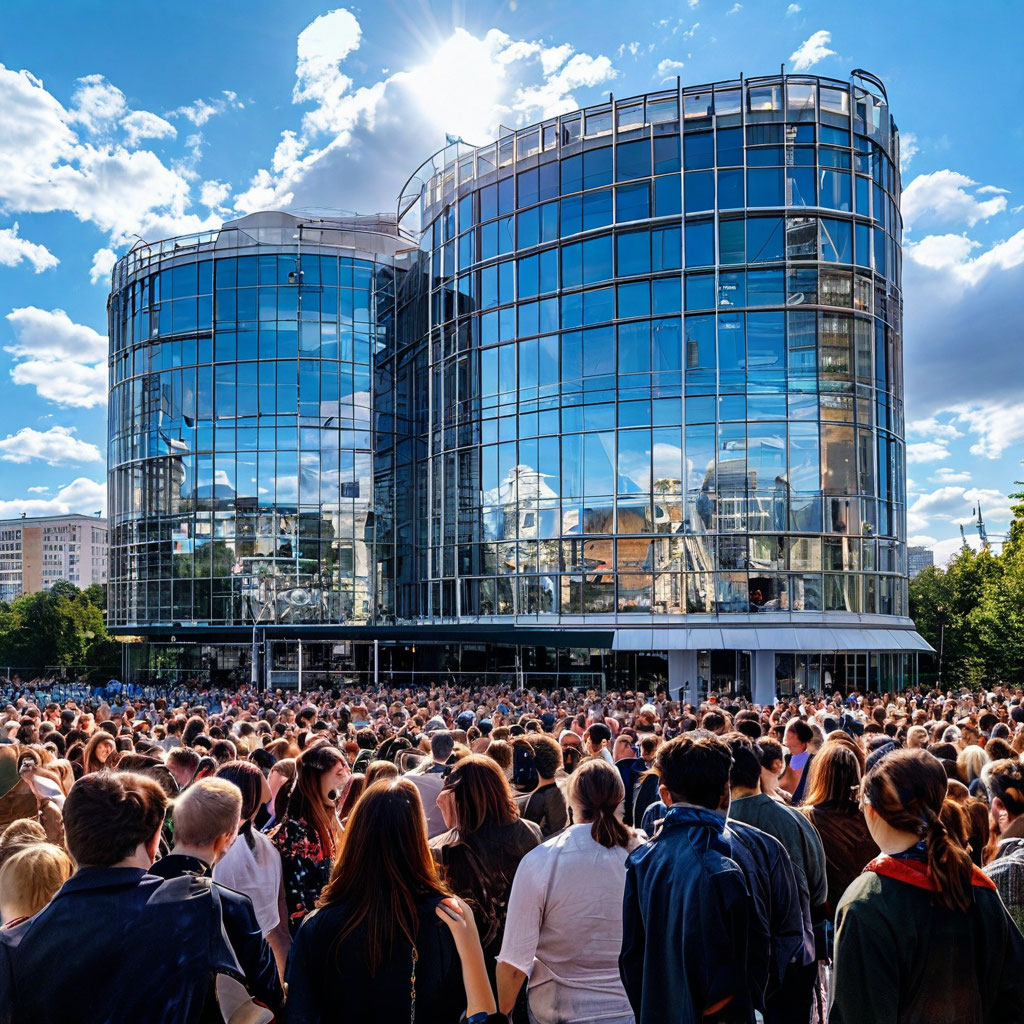
The Opening of the Boris Yeltsin Presidential Center in 2015: A Tribute to Russia’s First President
Imagine stepping into a world where history comes alive, where the echoes of the past resonate through every exhibit, and where the legacy of a pivotal figure in Russian history is honored. This is the experience awaiting visitors at the Boris Yeltsin Presidential Center in Yekaterinburg, Russia. Opened on November 25, 2015, this center stands as a testament to the life and times of Boris Yeltsin, Russia’s first president, and the transformative era of the 1990s.
A Vision Realized: The Birth of the Yeltsin Center
The journey to the establishment of the Yeltsin Center began with a federal law enacted in 2008, which mandated the creation of centers dedicated to the historical legacy of each Russian president in their city of birth. Yekaterinburg, the city where Yeltsin spent much of his life, was chosen as the location for this monumental project. The center was designed to preserve, study, and present to the public the historical heritage of Boris Yeltsin and the era he represented. ([yeltsin.ru](https://yeltsin.ru/news/boris-yeltsin-presidential-center-will-be-opened-in-ekaterinburg-on-november-25-2015/?utm_source=openai))
The Grand Opening: A Momentous Occasion
The inauguration of the Yeltsin Center was a significant event, drawing dignitaries from across Russia and the world. Russian President Vladimir Putin and Prime Minister Dmitry Medvedev attended the ceremony, underscoring the importance of the center in acknowledging Yeltsin’s contributions to Russia’s history. The opening was also graced by Yeltsin’s widow, Naina Yeltsina, and his daughter, Tatyana Yumasheva, who expressed their gratitude for the tribute to Yeltsin’s memory. ([theguardian.com](https://www.theguardian.com/world/2015/nov/25/boris-yeltsin-museum-opens-in-yekaterinburg?utm_source=openai))
Exploring the Exhibits: A Journey Through History
As you step into the Yeltsin Center, you’re greeted by a vast array of exhibits that chronicle the tumultuous and transformative period of the 1990s. The museum is designed to provide an impartial view of events, allowing visitors to reflect on the past without imposed judgments. The exhibits are organized into thematic sections, each representing a critical point in Russia’s modern history. ([new-east-archive.org](https://www.new-east-archive.org/articles/show/5056/centre-dedicated-to-legacy-of-boris-yeltsin-opens-in-yekaterinburg?utm_source=openai))
- The Labyrinth of History: This section introduces visitors to the social and political context of the 20th century, setting the stage for understanding the changes that unfolded during Yeltsin’s tenure.
- Critical Moments: Here, visitors can delve into pivotal events such as the economic reforms of 1992, the October Events of 1993, the Chechen wars, and the 1996 elections, each presented with original documents, photos, and multimedia presentations.
- Personal Artifacts: The museum houses personal items of Yeltsin, including his Kremlin office recreated with original furniture and a mock-up of a Moscow trolleybus he used during his early political career. ([rbth.com](https://www.rbth.com/politics_and_society/2015/11/27/museum-to-rusias-first-president-boris-yeltsin-opens-to-public_545139?utm_source=openai))
Innovative Design: Merging Technology with History
The Yeltsin Center is not just a repository of artifacts; it’s a fusion of history and modern technology. The museum employs cutting-edge multimedia technologies to bring the past to life. A notable feature is the giant stationary projection diorama in the atrium, which spans 67 meters in length and 9.2 meters in height. This immersive installation uses 30 high-end projectors to create a vivid and engaging experience for visitors. ([docs.connect.panasonic.com](https://docs.connect.panasonic.com/projector/casestudies/museum001/index.html?utm_source=openai))
Beyond the Museum: A Hub for Education and Culture
Beyond its role as a museum, the Yeltsin Center serves as a cultural and educational hub. It regularly hosts lectures, workshops, and film festivals, fostering a space for dialogue and learning. The center’s educational programs aim to engage visitors of all ages, from children to adults, ensuring that the lessons of the past resonate with future generations. ([yeltsin.ru](https://yeltsin.ru/news/boris-yeltsin-presidential-center-will-be-opened-in-ekaterinburg-on-november-25-2015/?utm_source=openai))
International Recognition: A European Benchmark
In 2017, the Yeltsin Center received international acclaim by being recognized as the best museum in Europe by the Council of Europe. This accolade highlights the center’s commitment to presenting history in an engaging and accessible manner, setting a benchmark for museums worldwide. ([en.wikipedia.org](https://en.wikipedia.org/wiki/Boris_Yeltsin_Presidential_Center?utm_source=openai))
Conclusion: A Living Tribute to a Pivotal Era
The opening of the Boris Yeltsin Presidential Center in 2015 marked a significant milestone in Russia’s journey to understand and appreciate its recent history. By preserving and presenting the legacy of Boris Yeltsin and the transformative 1990s, the center offers visitors a comprehensive and immersive experience. It stands as a testament to the resilience and evolution of Russia, inviting all to explore, reflect, and learn from the past.
