
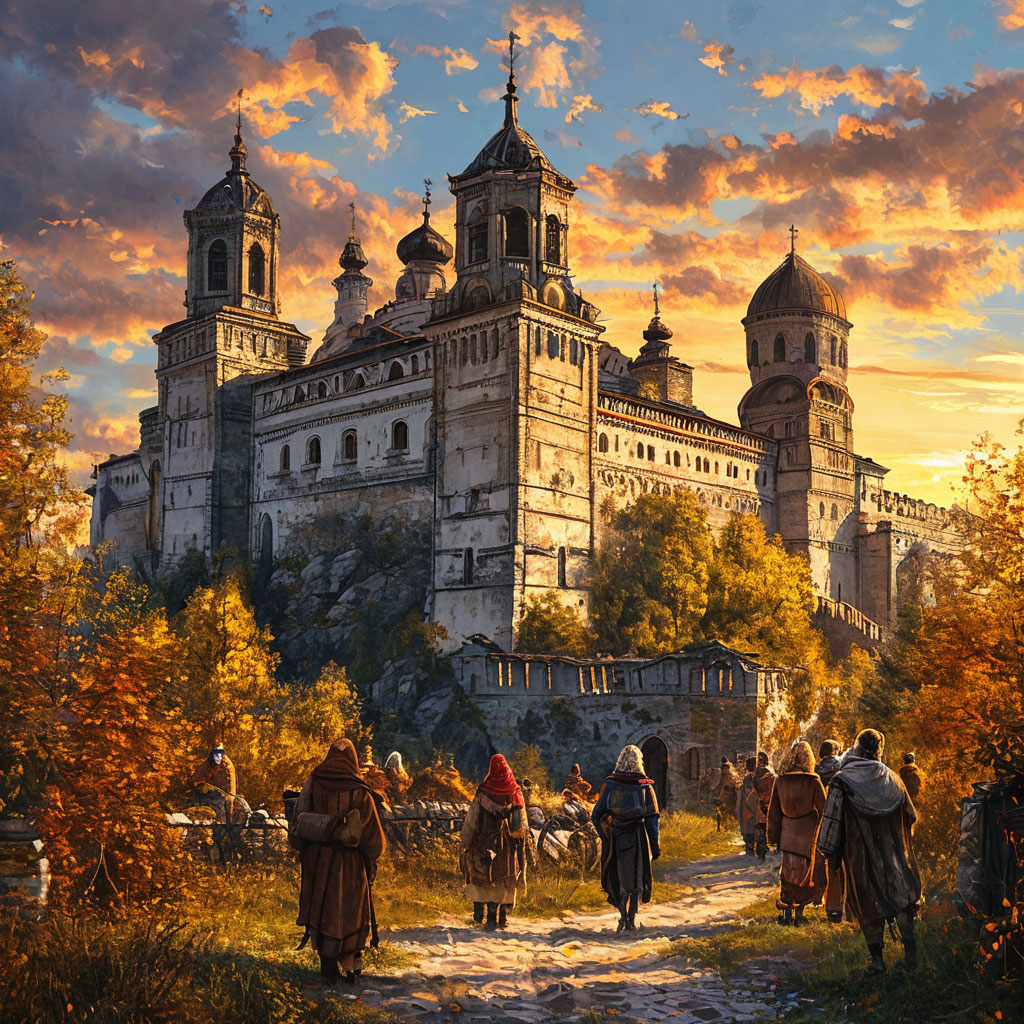
Verkhoturye Fortress (1598): Orthodox Mission & Trade Post
Imagine a time when the vast expanse of Siberia was a land of mystery, its riches hidden from the world. Now, picture a small fortress perched atop a rocky cliff, standing as a gateway between the known world and the unknown east. This is Verkhoturye, a town that played a pivotal role in Russia’s expansion and spiritual life.
The Birth of Verkhoturye
In 1598, two visionaries, Vasily Golovin and Ivan Voyeykov, established a fortress on the site of the Mansi settlement of Neromkar. Their mission was clear: to secure a strategic point along the Tura River, facilitating the movement of goods and people between European Russia and Siberia. This fortress, known as Verkhoturye, became the northernmost Kremlin in Russia, a testament to its significance. ([geomerid.com](https://geomerid.com/en/place/verkhoturye-kremlin-travel-guide/overview/?utm_source=openai))
A Strategic Crossroads
Verkhoturye wasn’t just a military outpost; it was a bustling hub of commerce and culture. Merchants and traders traversed the Babinov Road, a route pioneered by Artemy Babinov, which connected Solikamsk to Verkhoturye. Goods from Siberia, especially prized furs like sable, passed through this town, enriching its economy and connecting it to the heart of Russia. ([rbth.com](https://www.rbth.com/travel/329270-spire-verkhoturye-siberia?utm_source=openai))
The Spiritual Heartbeat
Beyond its commercial importance, Verkhoturye emerged as a spiritual center. The Trinity Cathedral, constructed between 1703 and 1712, stood as a beacon of Orthodox Christianity in the Urals. Its intricate frescoes and towering bell tower attracted pilgrims from far and wide. Nearby, the St. Nicholas Monastery, founded in 1604, became a sanctuary for those seeking solace and spiritual guidance. ([kuban-museum.ru](https://kuban-museum.ru/en/severo-zapad/verhoture-sverdlovskaya-oblast.html?utm_source=openai))
Resilience Amidst Challenges
Like many historic towns, Verkhoturye faced its share of adversities. Devastating fires in 1674 and 1738 threatened its existence, yet the town’s spirit remained unbroken. The construction of a stone Kremlin in the early 18th century, ordered by Peter the Great, symbolized a new era of resilience and architectural grandeur. ([geomerid.com](https://geomerid.com/en/place/verkhoturye-kremlin-travel-guide/overview/?utm_source=openai))
Decline and Transformation
By the mid-18th century, the dynamics of trade routes shifted. The establishment of a more direct path through Yekaterinburg led to a decline in Verkhoturye’s prominence as a trade post. However, its spiritual significance endured. The town became a center of pilgrimage, with the relics of Saint Simeon of Verkhoturye drawing countless devotees. ([en.wikipedia.org](https://en.wikipedia.org/wiki/Simeon_of_Verkhoturye?utm_source=openai))
Legacy and Modern-Day Verkhoturye
Today, Verkhoturye stands as a testament to Russia’s rich history. Its well-preserved Kremlin, historic churches, and monasteries offer a glimpse into a bygone era. The town’s unique blend of Orthodox heritage and industrial legacy makes it a captivating destination for history enthusiasts and spiritual seekers alike. ([rbth.com](https://www.rbth.com/travel/329270-spire-verkhoturye-siberia?utm_source=openai))
Visiting Verkhoturye is like stepping back in time, where every stone and structure tells a story of faith, resilience, and the enduring spirit of the Russian people.
