
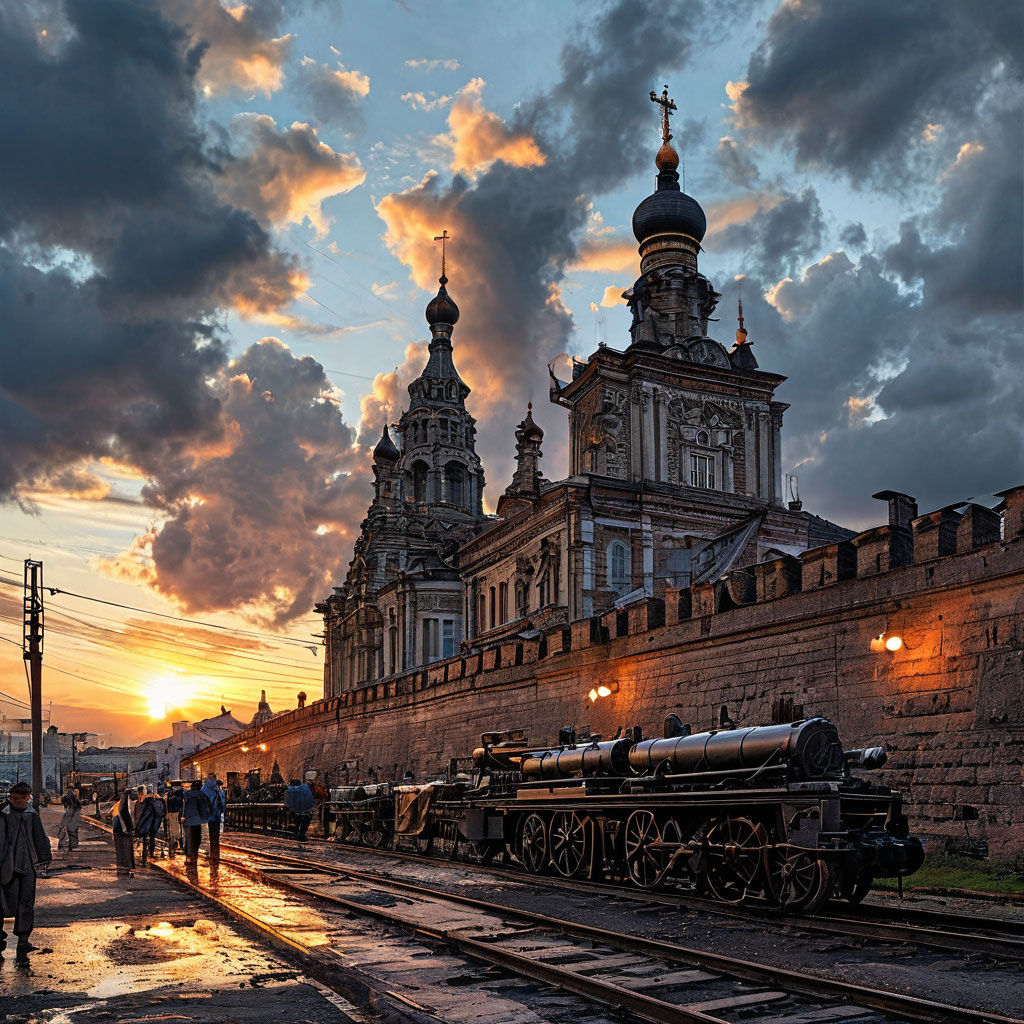
Yekaterinburg Fortress: Defensive Heart of a Factory City
Imagine a time when the Ural Mountains stood as a formidable barrier between Europe and Asia, and the Iset River meandered through a vast, untamed wilderness. In 1723, amidst this rugged landscape, a visionary project began—a fortress that would not only defend but also lay the foundation for a thriving industrial city. This is the story of the Yekaterinburg Fortress, the defensive heart of what would become one of Russia’s most significant urban centers.
The Birth of Yekaterinburg Fortress
In the early 18th century, Russia was expanding its reach eastward, seeking to harness the rich mineral resources of the Urals. Emperor Peter the Great, recognizing the strategic importance of the region, decreed the establishment of a foundry on the banks of the Iset River. This foundry would serve as the nucleus of a new settlement, which was to be named Yekaterinburg after Catherine I, Peter’s wife. To protect this burgeoning industrial hub, the Yekaterinburg Fortress was constructed in 1723, marking the city’s official founding date. The fortress was designed as an earthen rampart, measuring approximately 654 by 762 meters, with six bastions at its corners and along its main axis. A wooden palisade and a deep ditch reinforced its defenses, ensuring the safety of the settlement from potential threats. Inside its walls, the fortress housed essential facilities, including a dam, foundry, warehouse, mill, and bakery, all contributing to the city’s early industrial activities. The layout of the fortress also influenced the city’s urban planning, with its gates becoming the heads of future streets, shaping the city’s growth and development. ([kuban-museum.ru](https://kuban-museum.ru/en/sibir/gorod-ekaterinburg.html?utm_source=openai))
From Fortress to Industrial Powerhouse
As the 18th century progressed, Yekaterinburg expanded beyond the confines of its original fortress. The city’s strategic location on the Siberian Route, established in 1763, transformed it into a vital trade and commerce center between east and west. This development earned Yekaterinburg the moniker “window to Asia.” The fortress, once a symbol of defense, gradually became redundant as the city outgrew its protective walls. By the 1790s, portions of the fortress were being dismantled to make way for the city’s burgeoning industrial landscape. ([en.wikipedia.org](https://en.wikipedia.org/wiki/Yekaterinburg?utm_source=openai))
The Legacy of Yekaterinburg Fortress
Today, while the original Yekaterinburg Fortress no longer stands, its legacy endures in the city’s architecture and urban layout. The fortress’s influence is evident in the city’s grid-like street pattern, which facilitated organized growth and development. The transformation from a defensive stronghold to an industrial powerhouse reflects the resilience and adaptability of Yekaterinburg’s inhabitants. The city’s rich industrial heritage, rooted in its early days as a fortress, continues to shape its identity, making it a unique blend of historical significance and modern innovation.
Exploring Yekaterinburg’s Industrial Heritage
Yekaterinburg’s journey from a fortified settlement to an industrial giant is a testament to human ingenuity and determination. The remnants of the fortress, though no longer visible, live on in the city’s spirit and character. As you explore Yekaterinburg today, you walk in the footsteps of those who built and defended this remarkable city, a city that continues to thrive and evolve, standing as a beacon of Russia’s industrial prowess and cultural richness.
