
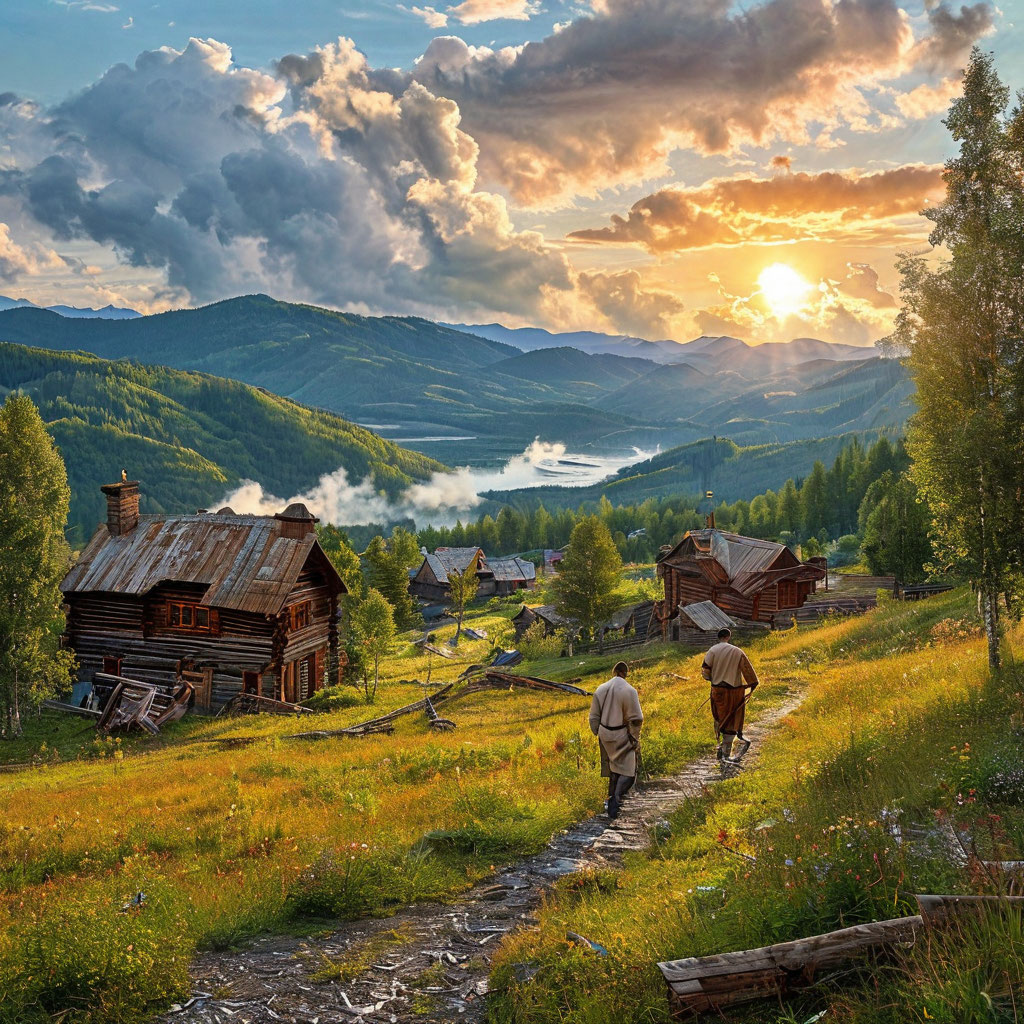
Satka Iron Smelter: The Birth of a Town from the Furnace’s Flame
Imagine a time when the Southern Ural Mountains echoed with the rhythmic clang of iron being forged, and a small settlement emerged from the smoke and fire of industry. This is the story of Satka, a town born from the heart of a furnace, where the iron smelter and the community grew together, shaping each other’s destiny.
The Spark of Industry
In 1758, nestled on the western slopes of the Southern Ural Mountains, a significant event unfolded. An iron mining factory was established, marking the inception of what would become Satka. This wasn’t just a factory; it was the lifeblood of the region, drawing people from various walks of life to its fiery embrace. The town’s name, “Satka,” is derived from the Satka River that meanders through the area, symbolizing the deep connection between the land and the people.
The Furnace and the People
As the iron smelter’s furnaces roared to life, they attracted a diverse workforce. Among them were the Old Believers, a group seeking religious freedom, who found solace in Satka’s burgeoning community. By the early 20th century, the town had blossomed to a population of up to 10,000. The streets buzzed with activity, boasting two churches, two schools, a post office, a telegraph, a hospital, and a consumer society. Industrial and commercial enterprises flourished, weaving a rich tapestry of life that was both industrious and vibrant.
Royal Recognition
In 1824, Emperor Alexander I visited Satka, a gesture that illuminated the town’s significance in the Russian Empire. This royal attention spurred further development, leading to the establishment of two blast furnaces and the expansion of mechanical workshops and foundries. The town was not just a place of work; it was a testament to human ingenuity and the spirit of progress.
The Soviet Era and Beyond
The winds of change swept through Satka with the advent of the Soviet government. In 1928, the town was reclassified as an urban-type settlement, and by 1937, it had achieved city status. The industrial landscape evolved, with the smelter continuing to be a cornerstone of the local economy. The unique narrow-gauge railway, stretching about 20 kilometers and fully electrified, became a lifeline, transporting magnesite and other ores to the smelter, and symbolizing the town’s industrial prowess.
Legacy of the Furnace
Today, Satka stands as a testament to the resilience and spirit of its people. The iron smelter, once the heart of the town, has left an indelible mark on its identity. The blast furnaces, now silent, serve as monuments to an era that shaped the town’s character. Satka’s rich industrial heritage continues to influence its culture, economy, and the daily lives of its residents, reminding us of the transformative power of industry and community.
As you walk through Satka’s streets, you can almost hear the echoes of the past—the clang of iron, the hum of the narrow-gauge railway, and the vibrant life that once filled the air. It’s a place where history and modernity coexist, each telling a story of human endeavor and the enduring spirit of a community forged in the fires of industry.
