
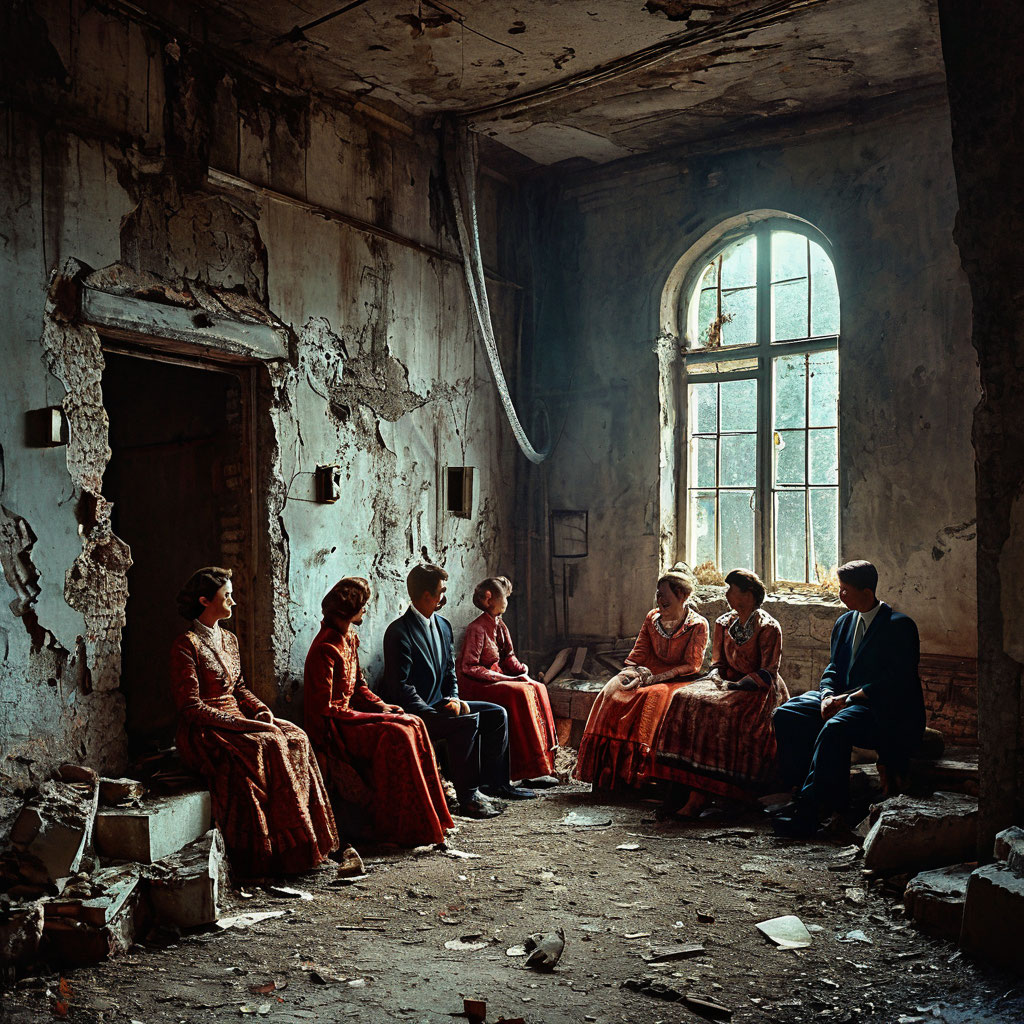
The Execution of the Romanov Family in Yekaterinburg (1918)
Imagine a night in July 1918, in the heart of Russia’s Ural Mountains. In the city of Yekaterinburg, a momentous event unfolds that will forever alter the course of Russian history. The Romanov family, who had ruled Russia for over three centuries, faces a tragic end. This is the story of their final days, the events leading up to their execution, and the enduring legacy they left behind.
The Romanovs: A Glimpse into Imperial Russia
At the dawn of the 20th century, the Romanov dynasty stood as a symbol of Russia’s imperial grandeur. Tsar Nicholas II, the last emperor, ascended to the throne in 1894. His reign, however, was marked by challenges: military defeats, economic hardships, and growing public discontent. The Russo-Japanese War (1904–1905) and World War I (1914–1918) further strained the empire, leading to widespread unrest.
In 1917, amidst the chaos of revolution, Tsar Nicholas II abdicated, ending over 300 years of Romanov rule. The family was placed under house arrest, first in Tsarskoye Selo and later in Tobolsk, Siberia. Their once opulent lifestyle was replaced by confinement and uncertainty.
The Move to Yekaterinburg
In April 1918, the Bolsheviks, now in power, decided to relocate the Romanovs to Yekaterinburg, a city in the Ural Mountains. The official reason was to protect them from potential monarchist forces advancing from the east. However, some historians suggest that the Bolsheviks feared the Romanovs might become a rallying point for anti-revolutionary sentiments. Therefore, they believed that moving the family to Yekaterinburg would prevent any potential rescue attempts.
Upon arrival, the Romanovs were confined to the Ipatiev House, a modest two-story building. The house was surrounded by a high fence, and the family was under constant surveillance. Despite the austere conditions, they tried to maintain a semblance of normalcy, engaging in daily routines and spending time together.
The Fateful Night: July 16–17, 1918
As the Russian Civil War intensified, the Bolsheviks grew increasingly concerned about the approaching Czechoslovak Legion, an anti-Bolshevik force advancing towards Yekaterinburg. Fearing that the Romanovs might be rescued, the Ural Regional Soviet, the local Bolshevik authority, decided to execute the family.
On the night of July 16, 1918, Yakov Yurovsky, the commandant of the Ipatiev House, informed the Romanovs that they were to be moved to a safer location due to the advancing forces. The family was awakened, dressed, and led to the basement of the house. There, they were told that a photograph would be taken to dispel rumors of their escape. As they stood together, a group of armed Bolsheviks entered and opened fire. The execution was brutal and swift, resulting in the deaths of Tsar Nicholas II, Tsarina Alexandra, their five children—Olga, Tatiana, Maria, Anastasia, and Alexei—and four servants. The bodies were then hastily disposed of to prevent any future veneration or identification.
The Aftermath and Discovery of the Remains
In the immediate aftermath, the Bolsheviks attempted to erase all traces of the execution. The bodies were transported to a nearby mine shaft, Ganina Yama, where they were disposed of. However, the White Army, which opposed the Bolsheviks, eventually captured Yekaterinburg and began searching for the remains of the Romanovs. In 1919, they discovered the charred remains in the mine shaft, but the Bolsheviks had already relocated the bodies to another secret location.
Decades later, in 1991, a mass grave was discovered near Yekaterinburg, containing the remains of the Romanov family and their servants. DNA analysis confirmed their identities. In 2000, the Russian Orthodox Church canonized the Romanovs as “Passion Bearers,” recognizing their martyrdom and the tragic end of the imperial family. A church, the Church on Blood, was built on the site of the Ipatiev House to honor their memory. ([en.wikipedia.org](https://en.wikipedia.org/wiki/Church_of_All_Saints%2C_Yekaterinburg?utm_source=openai))
The Legacy of the Romanovs
The execution of the Romanov family marked a pivotal moment in Russian history, symbolizing the end of the imperial era and the rise of the Soviet state. Their tragic fate has inspired numerous books, films, and scholarly studies, reflecting the enduring fascination with their lives and deaths. The Church on Blood in Yekaterinburg stands as a testament to their legacy, attracting visitors from around the world who seek to understand the complexities of Russia’s past and the human stories intertwined with it.
As you reflect on this chapter of history, consider the profound impact of the Romanovs’ story. Their lives and untimely deaths offer insights into the tumultuous period of the Russian Revolution and the personal dimensions of historical events. The Church on Blood serves as a poignant reminder of the human cost of political upheaval and the enduring quest for truth and reconciliation.
For a more detailed account of the Romanov family’s final days and the subsequent investigations, you can refer to the article “Murder of the Romanov family” on Wikipedia. ([en.wikipedia.org](https://en.wikipedia.org/wiki/Murder_of_the_Romanov_family?utm_source=openai))
