
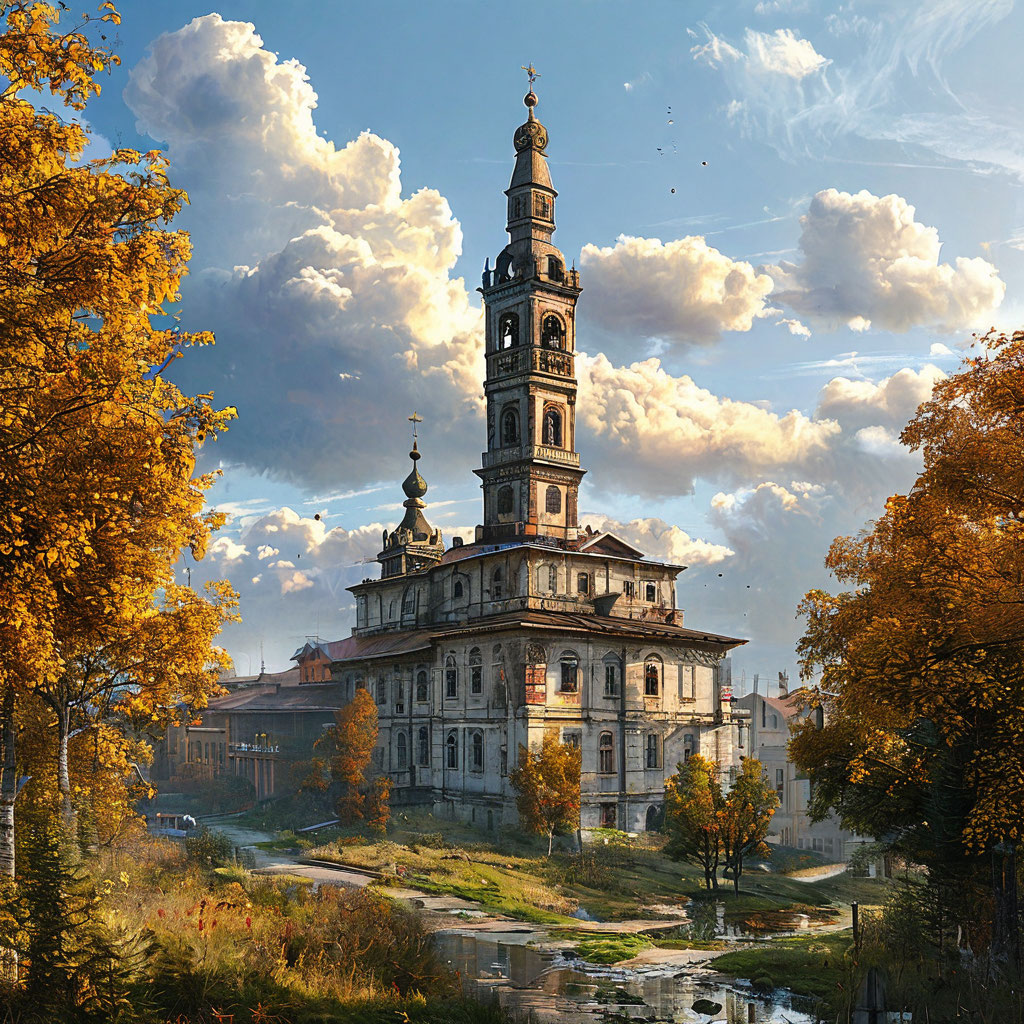
The Leaning Tower of Nevyansk: A Testament to the Demidov Dynasty’s Industrial Legacy
Imagine standing in the heart of Russia’s Ural Mountains, gazing up at a towering structure that leans with a mysterious grace. This is the Leaning Tower of Nevyansk, an architectural enigma that has captivated visitors for centuries. But this isn’t just any tower; it’s a monument to ambition, innovation, and the indomitable spirit of the Demidov family, whose industrial prowess in the 18th century transformed Russia’s metallurgical landscape.
The Rise of the Demidov Dynasty
Our story begins in the late 17th century with Nikita Demidov, a blacksmith from Tula. His exceptional skill in weaponry caught the eye of Tsar Peter the Great, leading to the establishment of one of Russia’s first metallurgical factories in Tula between 1694 and 1696. This factory produced iron that rivaled the quality of English and Swedish imports, marking a significant milestone in Russia’s industrial journey. By 1702, Peter the Great granted Nikita Demidov extensive land and mining rights, solidifying his status as a leading industrialist of the time. Under his leadership, the Demidov factories became the main supplier to the Russian army during the Great Northern War, producing weapons at twice the speed and half the cost of competitors, thereby contributing decisively to Russia’s victory. In recognition of his services, Tsar Peter the Great ennobled him in 1720. ([en.wikipedia.org](https://en.wikipedia.org/wiki/Nikita_Demidov?utm_source=openai))
The Birth of Nevyansk and Its Tower
In 1701, Tsar Peter the Great founded the city of Nevyansk, envisioning it as a hub for iron and pig iron production. The construction of the Nevyansk plant was completed swiftly, and by December 15, 1701, the first smelting was carried out, marking the city’s birth. In 1702, the plant was acquired by Nikita Demidov, who expanded its operations and significantly increased production volumes. By the end of the second decade of the 18th century, Demidov’s factories were producing about two-thirds of all metal in the Russian Empire. ([trevaladvisor.com](https://trevaladvisor.com/attractions/nevyanskaya-tower/?utm_source=openai))
In 1720, Tsar Peter the Great granted Nikita Demidov a title of nobility, and the following year, his son, Akinfiy Demidov, began the construction of the Leaning Tower of Nevyansk. This tower was not just an architectural endeavor but a symbol of the Demidov family’s industrial might and a testament to their contributions to Russia’s economic and military strength. ([trevaladvisor.com](https://trevaladvisor.com/attractions/nevyanskaya-tower/?utm_source=openai))
The Architectural Marvel
The Leaning Tower of Nevyansk stands at 57.5 meters tall, with a base measuring 9.5 meters wide. Its top leans approximately 3 degrees from the vertical, a feature that has sparked numerous theories and legends. The exact date of construction remains uncertain, but historians believe it was built between 1721 and 1745. The tower’s design is a blend of functionality and symbolism, reflecting the Demidov family’s industrial heritage. ([en.wikipedia.org](https://en.wikipedia.org/wiki/Leaning_Tower_of_Nevyansk?utm_source=openai))
Inside the tower, each floor served a distinct purpose. The second floor housed Akinfiy Demidov’s office, while the third floor contained a laboratory equipped with a furnace. Traces of silver and gold found in the soot suggest that this laboratory may have been used for smelting precious metals, possibly even minting coins. The seventh and eighth floors feature a clock tower with a carillon made by English master Richard Phelps in 1730, adding a musical element to the structure. ([en.wikipedia.org](https://en.wikipedia.org/wiki/Leaning_Tower_of_Nevyansk?utm_source=openai))
Innovations Ahead of Their Time
The tower is crowned with a gilded sphere and spiked rays, which served as a lightning rod—a quarter of a century before Benjamin Franklin’s scientific explanation of such devices. This early adoption of lightning protection underscores the Demidovs’ forward-thinking approach to technology and safety. ([en.wikipedia.org](https://en.wikipedia.org/wiki/Leaning_Tower_of_Nevyansk?utm_source=openai))
The Demidov Legacy in Metallurgy
Under Akinfiy Demidov’s leadership, the Demidov family expanded their industrial empire, establishing numerous metallurgical plants and mines across Russia. By the end of the 18th century, they controlled vast estates and enterprises, producing about 40% of Russia’s cast iron output. Their factories supplied materials for international projects, including the roof tiles of the Palace of Westminster in London and the Eiffel Tower in Paris. ([en.wikipedia.org](https://en.wikipedia.org/wiki/Demidov?utm_source=openai))
Visiting the Leaning Tower Today
Today, the Leaning Tower of Nevyansk stands as a monument to the Demidov family’s industrial legacy. Visitors can explore its various floors, each offering a glimpse into the past and the innovations that shaped Russia’s industrial landscape. The tower continues to inspire awe and curiosity, inviting all who visit to delve into the rich history of the Ural Mountains and the visionary leaders who transformed it. ([trevaladvisor.com](https://trevaladvisor.com/attractions/nevyanskaya-tower/?utm_source=openai))
So, the next time you find yourself in the Ural Mountains, take a moment to visit the Leaning Tower of Nevyansk. Stand beneath its leaning silhouette and imagine the industrious spirit of the Demidov family that brought it to life—a testament to human ingenuity and the enduring quest to build something lasting and remarkable.
