
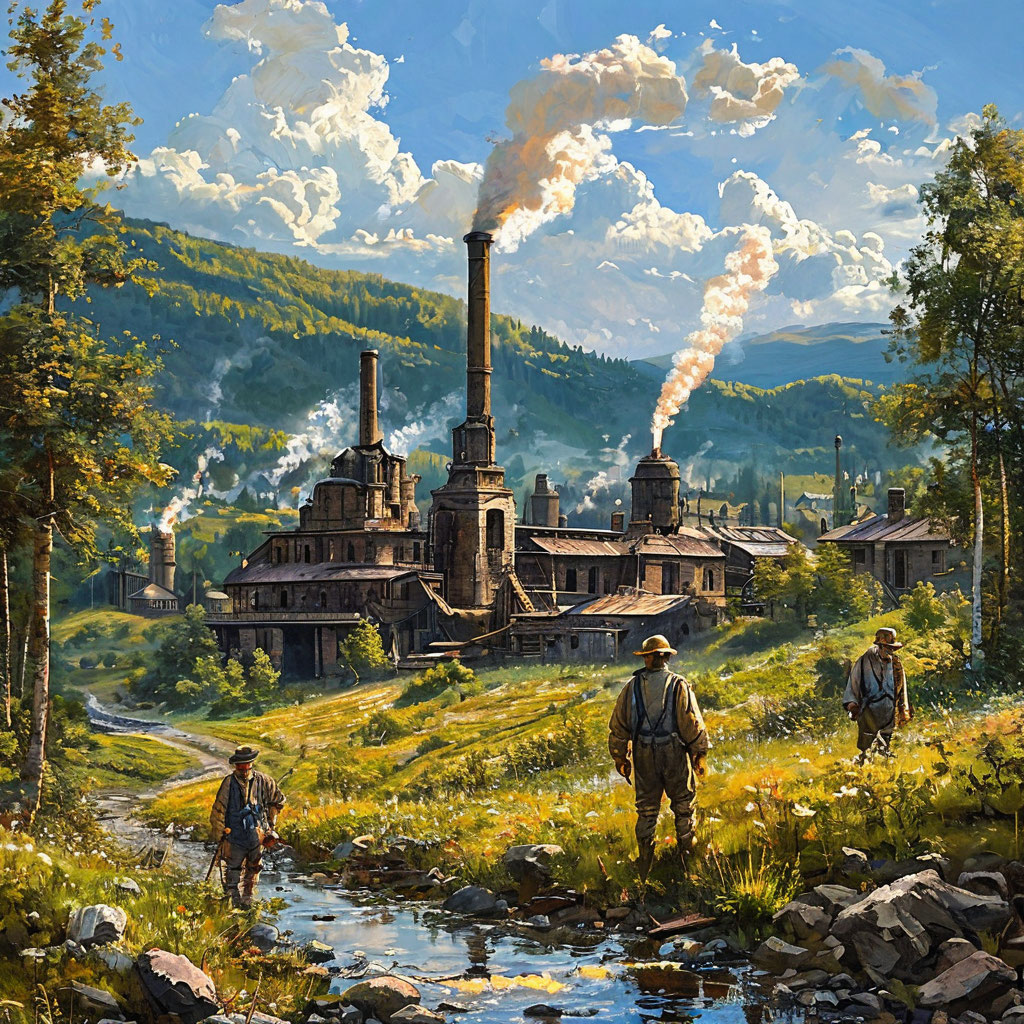
The Demidov Dynasty: Pioneers of Ural’s Industrial Revolution
Imagine a time when Russia’s vast expanse was dotted with dense forests and untamed rivers, and the Ural Mountains stood as a formidable barrier between Europe and Asia. Amidst this rugged landscape, a family emerged whose vision and determination would transform the region into an industrial powerhouse. This is the story of the Demidov dynasty, whose legacy in the Ural’s industrialization is both profound and enduring.
The Humble Beginnings
Our tale begins in the 17th century with Demid Antufiev, a free blacksmith from Tula. His exceptional skill in metalwork laid the foundation for what would become one of Russia’s most influential industrial families. His son, Nikita Demidov (1656–1725), inherited his father’s talent and ambition. Recognizing the strategic importance of metallurgy, Nikita established one of Russia’s first metallurgical factories in Tula between 1694 and 1696. This facility produced iron that rivaled the quality of English and Swedish imports, marking a significant milestone in Russia’s industrial history. ([en.wikipedia.org](https://en.wikipedia.org/wiki/Nikita_Demidov?utm_source=openai))
Expansion into the Urals
In 1699, Nikita expanded his horizons by founding a new factory in Yekaterinburg, a city that would become synonymous with industrial progress. The following year, he ventured into Siberia, opening the region’s first iron mine at Kolyban. His innovative approach and dedication to quality caught the attention of Tsar Peter the Great, who, in 1702, granted him the right to establish a foundry in the Urals. This facility became Russia’s first true armaments factory, supplying the military with essential munitions during the Great Northern War (1700–1721). ([en.wikipedia.org](https://en.wikipedia.org/wiki/Nikita_Demidov?utm_source=openai))
The Rise of Akinfiy Demidov
Nikita’s son, Akinfiy Nikitich Demidov (1678–1745), took the family’s industrial endeavors to unprecedented heights. After studying metallurgical techniques in Saxony, Akinfiy returned to Russia with a vision to revolutionize the industry. Between 1717 and 1735, he established at least nine steel foundries and munitions factories, expanding the family’s influence across the Urals and Western Siberia. By the time of his death, the Demidov factories produced over half of Russia’s metal output, solidifying their status as the nation’s leading industrial dynasty. ([en.wikipedia.org](https://en.wikipedia.org/wiki/Akinfiy_Nikitich_Demidov?utm_source=openai))
Innovations and Contributions
The Demidovs were not merely industrialists; they were innovators who introduced advanced metallurgical techniques that set new standards in the industry. They pioneered the use of blast furnaces and hydro-powered machinery, significantly enhancing productivity. Their factories supplied materials for international projects, including the construction of the Palace of Westminster in London, showcasing the global reach of their products. ([en.wikipedia.org](https://en.wikipedia.org/wiki/Demidov?utm_source=openai))
Vertical Integration and Economic Impact
Understanding the importance of controlling every aspect of production, the Demidovs implemented vertical integration strategies. They owned and operated mines, forests, and transportation networks, ensuring a steady supply of raw materials and efficient distribution channels. This comprehensive control allowed them to produce goods at a fraction of the cost of their competitors, making a decisive contribution to Russia’s military victories and economic development. ([en.wikipedia.org](https://en.wikipedia.org/wiki/Demidov?utm_source=openai))
Legacy and Influence
The Demidov dynasty’s influence extended beyond metallurgy. They were patrons of education and culture, establishing schools that taught not only general education but also the principles of mechanics and mining. Their commitment to innovation and quality set a benchmark for future generations of industrialists. However, their vast industrial holdings faced severe repercussions during and after the 1917 Russian Revolution. The Bolsheviks nationalized their estates, factories, and heirlooms, marking the end of an era. ([en.wikipedia.org](https://en.wikipedia.org/wiki/Demidov?utm_source=openai))
Conclusion
The story of the Demidov dynasty is a testament to vision, innovation, and resilience. From humble beginnings to becoming the architects of Russia’s industrial revolution, their legacy in the Ural’s industrialization is both profound and enduring. Their journey not only transformed a region but also left an indelible mark on the course of Russian history, inspiring future generations to dream big and forge their own paths in the world of industry and beyond.
