
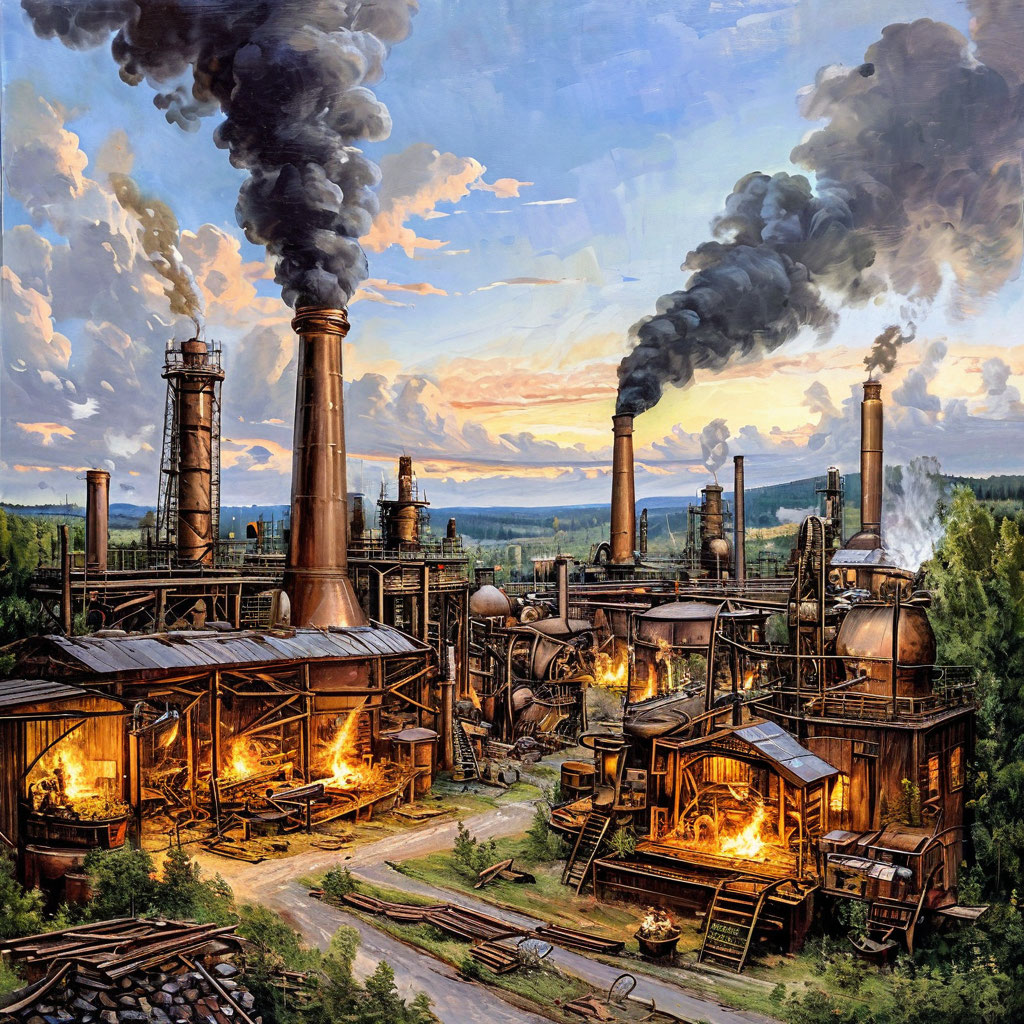
The Influence of Western Technology on Ural Industry
Imagine a vast expanse of rugged mountains and dense forests, stretching across the heart of Russia. This is the Ural region, a land rich in natural resources and steeped in a history of industrial transformation. In the 19th century, the Urals underwent a remarkable metamorphosis, largely due to the infusion of Western technologies that revolutionized its industries. Let’s embark on a journey through time to explore how these innovations reshaped the Ural landscape.
The Dawn of Industrialization in the Urals
In the early 1800s, the Ural region was a hub of traditional metalworking, with numerous iron and steel factories dotting the landscape. However, the methods employed were often outdated, relying on manual labor and rudimentary tools. The winds of change began to blow as Western industrialization reached Russia’s borders, bringing with it a wave of new technologies and ideas.
Introduction of Steam Power
One of the most significant Western innovations was the steam engine. In the 1830s, the first steam engines were introduced to Ural factories, marking a pivotal shift from manual labor to mechanized production. This advancement not only increased efficiency but also laid the groundwork for further industrial developments. The steam engine became the heartbeat of Ural industry, powering machinery and driving progress.
Adoption of Advanced Metallurgical Techniques
Western metallurgical practices also found their way to the Urals. The introduction of the puddling process, developed in Britain, allowed for the production of higher-quality iron. By the 1840s, Ural factories began implementing this technique, leading to a surge in iron production. Additionally, the kontuaz furnace, a French innovation, was adopted to improve the smelting process, further enhancing the quality and quantity of metal produced.
The Role of Foreign Expertise
Western influence wasn’t limited to technology alone; it also encompassed human expertise. European engineers and craftsmen were invited to the Urals to share their knowledge and skills. For instance, in the early 19th century, 140 European artisans were brought to the Izhevsk Arms Factory, and 115 German gunsmiths and steelworkers to the Zlatoust Arms Factory. Their contributions were invaluable in modernizing Ural industries and integrating Western methodologies into local practices.
Establishing Industrial Communities
The influx of Western technologies and expertise led to the establishment of industrial communities centered around factories. These communities were characterized by a paternalistic approach, where factory owners took on roles akin to that of a father figure, providing for the welfare of their workers. This system fostered a sense of unity and purpose, as workers and owners collaborated to achieve common industrial goals. The success of this model was evident in the rapid growth and development of Ural industries during this period.
Challenges and Adaptations
Despite the promising advancements, the integration of Western technologies was not without challenges. The Ural region faced issues such as inadequate infrastructure, including poor transportation networks, and a shortage of skilled labor familiar with new industrial methods. Moreover, the existing feudal system, with its reliance on serf labor, posed significant obstacles to the swift adoption of industrial practices. Overcoming these hurdles required a concerted effort from both the Russian government and industrial leaders to reform and modernize the region’s economic and social structures.
Government Initiatives
Recognizing the importance of industrial modernization, the Russian government took steps to facilitate the integration of Western technologies. Policies were implemented to encourage the construction of new factories, improve transportation networks, and provide incentives for foreign experts to work in Russia. These initiatives were crucial in bridging the technological gap between Russia and Western nations, enabling the Urals to become a significant industrial center by the late 19th century.
Legacy of Western Influence
The impact of Western technologies on Ural industry was profound and enduring. By the end of the 19th century, the Urals had transformed into a major industrial hub, producing a significant portion of Russia’s iron and steel. The region’s factories were equipped with state-of-the-art machinery, and its workers were skilled in advanced industrial techniques. This transformation not only boosted the Russian economy but also positioned the Urals as a key player in the global industrial landscape.
Continued Technological Evolution
The foundation laid by Western technologies in the 19th century set the stage for continuous innovation in the Urals. The region’s industries continued to evolve, adopting new technologies and methods to meet the demands of the 20th century. The legacy of this period is evident in the modern industrial landscape of the Urals, where a blend of traditional practices and cutting-edge technologies coexist, reflecting a rich history of adaptation and progress.
Conclusion
The 19th century was a transformative era for the Ural region, driven by the infusion of Western technologies and expertise. This period of industrialization not only reshaped the economic and social fabric of the Urals but also left an indelible mark on its cultural and industrial heritage. The story of the Urals’ industrial evolution is a testament to the power of innovation, collaboration, and the enduring human spirit to adapt and thrive in the face of change.
For a more in-depth exploration of this topic, you can refer to the article “History of metallurgy in the Urals” on Wikipedia. ([en.wikipedia.org](https://en.wikipedia.org/wiki/History_of_metallurgy_in_the_Urals?utm_source=openai))
