
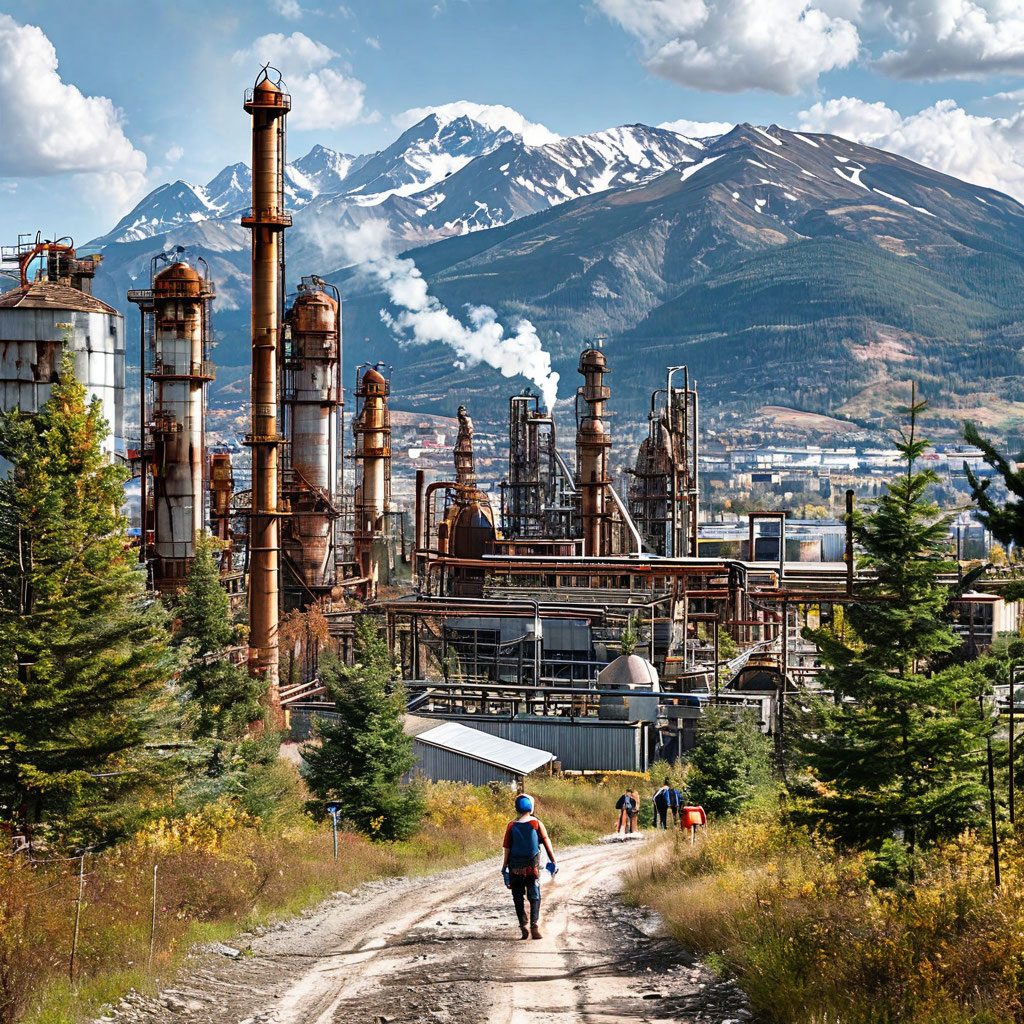
The Ural Mountains: Russia’s Industrial Backbone in the 21st Century
Imagine a vast expanse of rugged mountains, stretching from the Arctic tundra to the steppes of Kazakhstan. This is the Ural region, a land rich in minerals, history, and industrial prowess. For centuries, the Urals have been the heartbeat of Russia’s industrial output, and in the 21st century, they continue to play a pivotal role in the nation’s economic landscape.
The Industrial Legacy of the Urals
The Urals’ industrial significance isn’t a recent phenomenon. Dating back to the 18th century, the region was a global leader in metallurgy. By the end of the 18th century, the Urals produced 80.1% of Russia’s cast iron, 88.3% of its iron, and 100% of its copper. This dominance positioned Russia at the forefront of global iron production, smelting between 20% to 27% of the world’s copper. ([en.wikipedia.org](https://en.wikipedia.org/wiki/History_of_metallurgy_in_the_Urals?utm_source=openai))
Fast forward to the 20th century, and the Urals remained a cornerstone of Russia’s industrial might. The region’s metallurgical plants, such as the Magnitogorsk Iron and Steel Works and the Chelyabinsk Metallurgical Plant, were instrumental in producing steel, iron, and rolled products. By 1990, the Urals accounted for 24.5% of the Soviet Union’s cast iron, 26.1% of its steel, and 27.5% of its rolled products. ([en.wikipedia.org](https://en.wikipedia.org/wiki/History_of_metallurgy_in_the_Urals?utm_source=openai))
The 21st Century: A New Era of Industrialization
As Russia entered the 21st century, the Urals adapted to new economic challenges and opportunities. The region’s industrial landscape underwent significant modernization, embracing advanced technologies and diversifying its production capabilities.
Metallurgy: A Continued Dominance
Metallurgy remains a cornerstone of the Urals’ industrial output. The region’s metallurgical plants, such as the Magnitogorsk Iron and Steel Works and the Chelyabinsk Metallurgical Plant, continue to produce steel, iron, and rolled products. These plants have undergone significant modernization, embracing advanced technologies and diversifying their production capabilities. ([en.wikipedia.org](https://en.wikipedia.org/wiki/History_of_metallurgy_in_the_Urals?utm_source=openai))
Heavy Machinery: Engineering Excellence
The Urals are also home to some of Russia’s most prominent heavy machinery manufacturers. The Ural Heavy Machinery Plant, established in 1933, has been a leader in producing equipment for the mining and metallurgical industries. Over the decades, it has expanded its product range to include dragline excavators, drilling rigs, and presses, contributing significantly to Russia’s industrial capabilities. ([en.wikipedia.org](https://en.wikipedia.org/wiki/Uralmash?utm_source=openai))
Oil and Gas: Energy Powerhouse
In the 21st century, the Urals have solidified their position as an energy powerhouse. The region is a major producer of oil and natural gas, supplying a significant portion of Russia’s energy needs. The oil and natural gas fields of the West Siberia economic region, discovered in the 1960s and developed in the 1970s, have been particularly important. By 1985, this area produced about 400 million metric tonnes of petroleum annually, highlighting the Urals’ critical role in Russia’s energy sector. ([geographyofrussia.com](https://geographyofrussia.com/the-urals-metallurgy-machinery-and-foss-il-fuels/?utm_source=openai))
The Ural Economic Region: A Powerhouse of Industry
The Ural Economic Region, encompassing Sverdlovsk, Chelyabinsk, and Perm oblasts, is a significant contributor to Russia’s industrial output. This region accounts for approximately 10% of the national Gross Regional Product (GRP) and is characterized by a diverse and complex structure of machinery and metal industries. The Urals’ industrial landscape is marked by a high concentration of production around certain areas, such as transport hubs, and close cooperation between different branches, facilitating the recycling of industrial waste. ([en.wikipedia.org](https://en.wikipedia.org/wiki/Ural_Economic_Region?utm_source=openai))
Challenges and Future Prospects
Despite its industrial prowess, the Urals face challenges in the 21st century. Environmental concerns, such as pollution from industrial activities, have prompted calls for sustainable development practices. Additionally, the region must navigate the complexities of global markets and technological advancements to maintain its competitive edge.
However, the Urals’ rich industrial heritage, coupled with ongoing modernization efforts, position the region as a resilient and dynamic force in Russia’s industrial landscape. As the world continues to evolve, the Urals’ role in Russia’s industrial output remains as vital as ever, embodying a blend of historical significance and future potential.
In conclusion, the Urals are not just a geographical feature but a testament to Russia’s industrial spirit. From their early days as a metallurgical hub to their current status as an energy and manufacturing powerhouse, the Urals continue to shape and drive Russia’s industrial output in the 21st century.
