
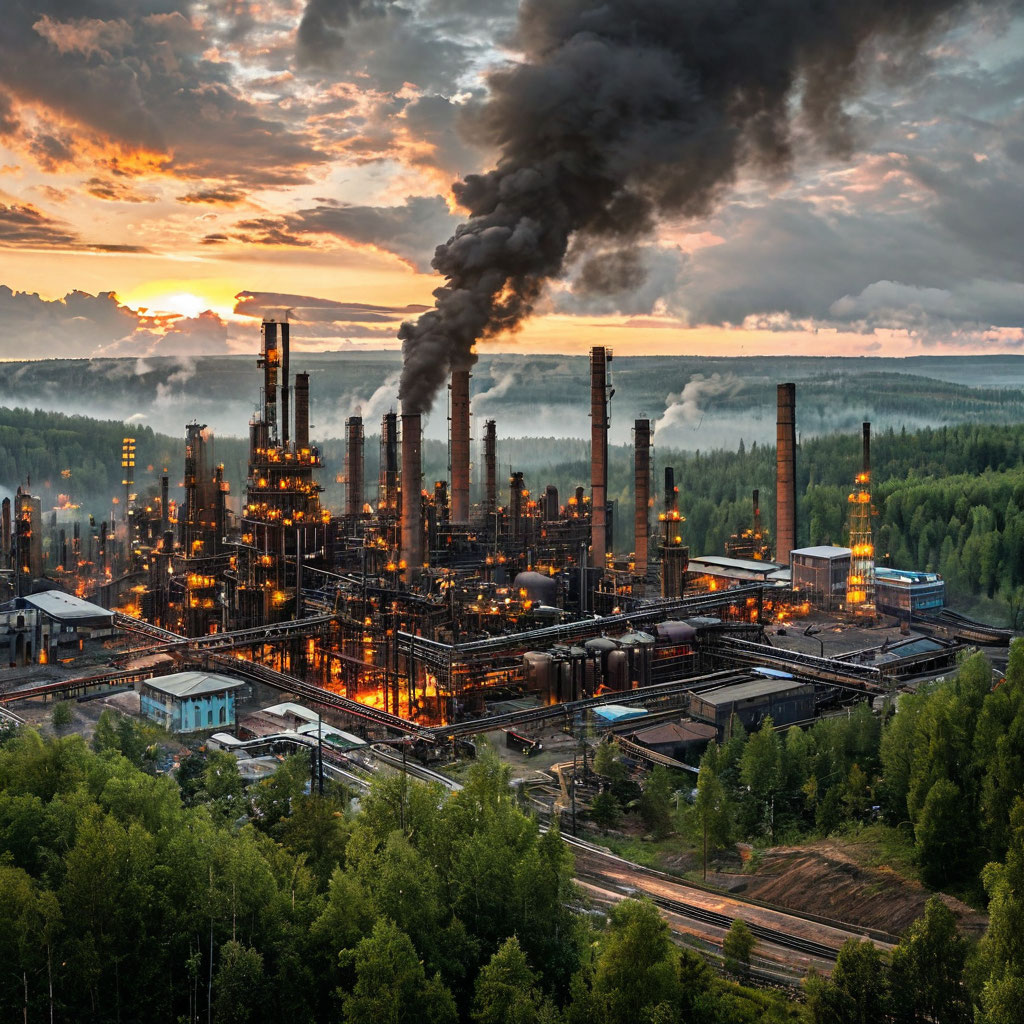
Izhevsk Iron and Arms Plant (1760–1807): Birth of Udmurt Capital
Imagine a time when the vast Russian Empire was expanding its reach, and the Ural Mountains stood as a formidable barrier between Europe and Siberia. Amidst this backdrop, a small settlement along the Izh River began its transformation into a bustling industrial hub. This is the story of Izhevsk, a city whose roots trace back to the establishment of the Izhevsk Iron and Arms Plant in 1760, setting the stage for its emergence as the capital of Udmurtia.
The Genesis of Izhevsk
In the mid-18th century, Russia was keen on harnessing the rich natural resources of the Ural region. On September 15, 1757, Count Pyotr Shuvalov, a prominent industrialist, received imperial permission from Empress Elizabeth to establish three ironworks in the Kama River area. One of these was to be situated along the Izh River, chosen for its abundant forests and proximity to the water, ideal for powering the ironworks. This marked the inception of what would become Izhevsk. ([en.wikipedia.org](https://en.wikipedia.org/wiki/Izhevsk?utm_source=openai))
Construction began in April 1760, with serfs and artisans from neighboring villages laboring under the direction of mining engineer Alexey Moskvin. The project was monumental, involving the creation of a dam to harness the river’s power, leading to the formation of the Izhevsk Reservoir, one of Europe’s largest at the time. By 1763, the ironworks was operational, producing iron bands and cast iron anchors, materials essential for the reconstruction of Moscow’s Kremlin and the development of St. Petersburg. ([en.wikipedia.org](https://en.wikipedia.org/wiki/Izhevsk?utm_source=openai))
Challenges and Resilience
The journey was not without its hardships. In October 1773, the Pugachev Rebellion, a significant uprising against Catherine the Great’s rule, reached the ironworks. Rebel forces captured the settlement, executed the management, and destroyed production facilities. However, the resilience of the workers and the strategic importance of the plant led to its swift restoration, underscoring the community’s determination and the plant’s vital role in the empire’s industrial landscape. ([en.wikipedia.org](https://en.wikipedia.org/wiki/Izhevsk?utm_source=openai))
The Dawn of Arms Manufacturing
As the 19th century dawned, the geopolitical landscape of Europe was shifting. The looming threat of Napoleon’s France prompted Russia to bolster its military capabilities. Recognizing the strategic importance of the Ural region, Emperor Paul I decreed the establishment of an arms factory. Mining engineer Andrey Deryabin was entrusted with this monumental task. He identified the Izhevsk Ironworks as the ideal location, leveraging its existing infrastructure and resources. ([en.wikipedia.org](https://en.wikipedia.org/wiki/Izhevsk?utm_source=openai))
On June 10, 1807, the Armory Office was inaugurated, marking the birth of the Izhevsk Arms Factory. Deryabin’s vision was clear: to create a state-of-the-art facility capable of producing firearms that could rival European standards. To achieve this, he invited foreign specialists from Germany, Sweden, and Denmark to train local craftsmen, ensuring the transfer of advanced technologies and techniques. ([en.wikipedia.org](https://en.wikipedia.org/wiki/Izhevsk?utm_source=openai))
Urban Planning and Growth
With the establishment of the arms factory, the settlement experienced rapid growth. Architect Feodor Dudin was commissioned to design a master plan for the burgeoning community. His vision laid out wide, straight streets intersecting perpendicular side streets, forming a grid pattern that facilitated efficient movement and organization. By 1810, the settlement had expanded significantly, with over 6,000 inhabitants. The community’s resilience was further demonstrated when, after a devastating fire in 1810 that destroyed 174 houses and several buildings, the residents rebuilt their homes and infrastructure, adhering to Dudin’s plan. ([en.wikipedia.org](https://en.wikipedia.org/wiki/Izhevsk?utm_source=openai))
Izhevsk’s Emergence as a Cultural and Industrial Center
The early 19th century was a period of significant development for Izhevsk. The arms factory not only produced firearms but also diversified into manufacturing tools and other metal products. The city’s strategic location along the Izh River facilitated trade and communication, further integrating it into the broader economic fabric of Russia. The resilience and industriousness of its people transformed Izhevsk from a modest settlement into a thriving industrial center, setting the stage for its future as the capital of Udmurtia. ([en.wikipedia.org](https://en.wikipedia.org/wiki/Izhevsk?utm_source=openai))
Legacy and Significance
The establishment of the Izhevsk Iron and Arms Plant in 1760 was more than just the founding of an industrial enterprise; it was the cornerstone of a city’s evolution. The plant’s growth and the community’s resilience in the face of challenges laid the foundation for Izhevsk’s emergence as a cultural, industrial, and eventually political center. Today, Izhevsk stands as a testament to the vision and determination of its early founders, embodying the spirit of innovation and perseverance that has defined its history. ([en.wikipedia.org](https://en.wikipedia.org/wiki/Izhevsk?utm_source=openai))
As you reflect on Izhevsk’s journey from a fledgling ironworks to the capital of Udmurtia, consider the interplay of geography, industry, and human spirit that shaped its destiny. The city’s story is a vivid tapestry of ambition, resilience, and transformation, offering valuable insights into the broader narrative of Russia’s industrialization and urbanization.
