
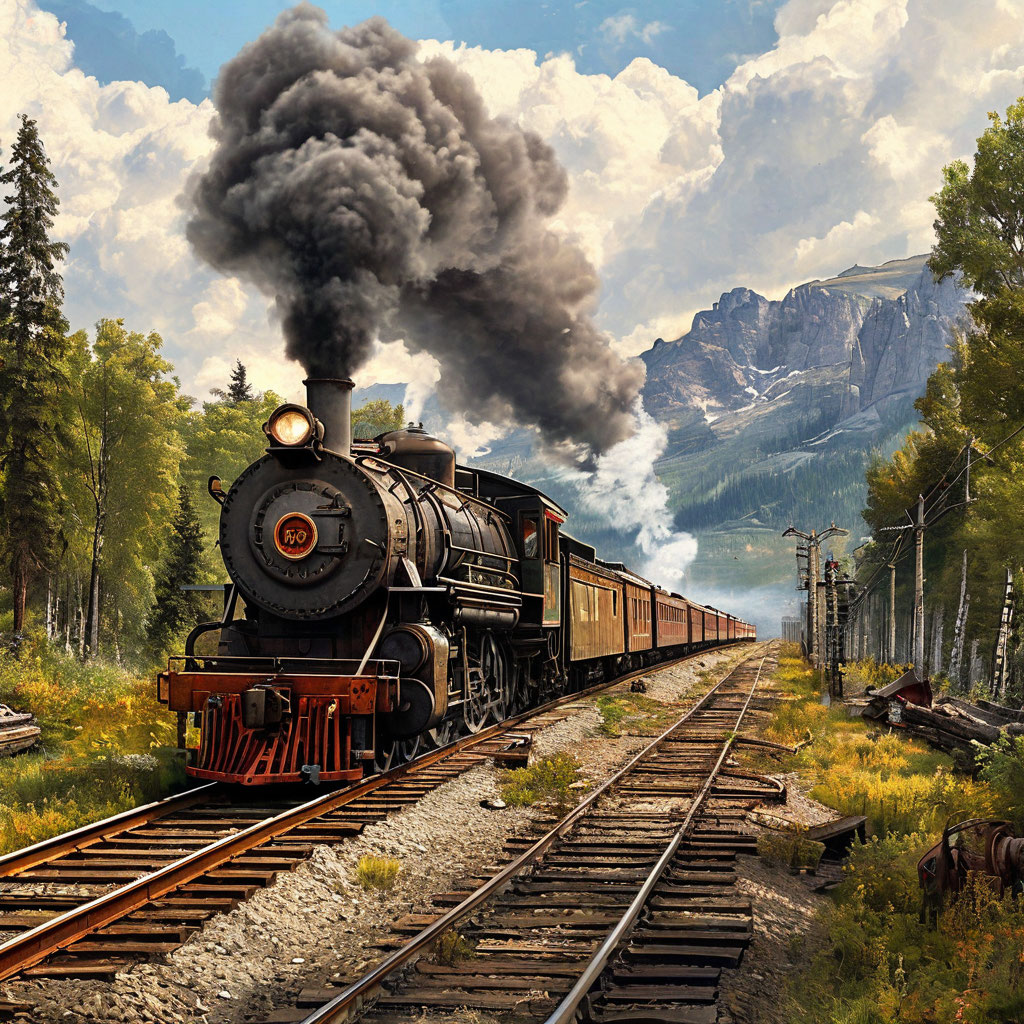
The Development of Transportation Infrastructure in the Urals
Imagine a vast expanse of rugged mountains, dense forests, and sprawling plains stretching across the heart of Russia. This is the Ural region—a land rich in natural resources and steeped in history. But how did this remote area transform into a bustling industrial hub? The answer lies in the evolution of its transportation infrastructure, which has been pivotal in shaping the Ural’s economic and cultural landscape.
The Early Foundations: 19th Century Railways
In the late 1800s, the Ural region was a mosaic of isolated communities, each with limited access to the outside world. The breakthrough came with the advent of the railway system, which promised to bridge these gaps and integrate the Urals into the broader Russian Empire.
In 1878, the construction of the Ural Mountain Railway marked a significant milestone. This line connected the industrial centers of the Urals with the rest of Russia, facilitating the movement of goods and people. The railway’s route traversed challenging terrains, including the formidable Ural Mountains, showcasing the engineering prowess of the time.
However, the Ural’s railway network remained sparse compared to other regions. For instance, in 1929, the density of railways in the Ural region was 3.5 kilometers per 1,000 square kilometers, while the European part of Russia boasted 10.6 kilometers per 1,000 square kilometers. This disparity highlighted the need for further development to meet the growing demands of the region’s industries and population.
The Soviet Era: A Surge in Infrastructure Development
The early 20th century, particularly the 1920s and 1930s, witnessed a surge in infrastructure development across the Soviet Union, and the Urals were no exception. The government’s ambitious industrialization plans necessitated the rapid expansion of transportation networks to support the burgeoning industries.
During this period, several key railway lines were constructed. Notably, the Troitc–Orsk and Sverdlovsk–Kurgan lines were established, enhancing connectivity within the region. In 1931, the electrification of the Perm railway line began, marking a significant technological advancement that improved efficiency and capacity.
Water transport also played a crucial role. By 1927, the Ural region boasted 37,900 kilometers of navigable waterways, with the Kama River basin accounting for about 75% of the cargo turnover. The reconstruction of major ports, such as the Perm River Port, and the establishment of the Kama River Shipping Company in 1931, underscored the importance of waterways in the region’s logistics.
Post-War Expansion: The Rise of Automobile and Pipeline Networks
The aftermath of World War II saw the Urals emerge as a central industrial powerhouse. To sustain and accelerate this growth, the transportation infrastructure underwent significant transformations.
The 1950s and 1960s marked the rapid expansion of the road network. The construction of highways and the proliferation of automobiles facilitated the movement of goods and people across the region. By the 1970s, the Urals experienced a substantial increase in cargo turnover via road transport, with the Sverdlovsk region alone handling 463 million tons of cargo by 1980.
Moreover, the development of pipeline networks revolutionized the energy sector. By the late 1960s, the Urals had over 4,200 kilometers of main gas pipelines and 2,380 kilometers of oil pipelines. The completion of the 1,900-kilometer oil pipeline from Surgut to Almetyevsk in 1973, passing through cities like Kurgan, Chelyabinsk, and Ufa, was a testament to the region’s growing energy infrastructure.
Modern Era: Challenges and Innovations
As the 20th century drew to a close, the Urals faced new challenges. The rapid industrialization had led to congestion and inefficiencies in the transportation network. The 1970s and early 1980s highlighted the need for modernization and expansion to meet the increasing demands of the economy.
In response, significant investments were made to enhance the capacity and efficiency of the transportation infrastructure. The construction of bypass routes around major cities, such as the southern bypass of Sverdlovsk (now Yekaterinburg), aimed to alleviate congestion and streamline the flow of goods and passengers.
Additionally, the integration of advanced technologies and the development of multimodal transport systems became focal points. The region’s strategic position as a transit hub between Europe and Asia spurred innovations in logistics and transportation management, positioning the Urals as a critical node in global trade routes.
Conclusion: The Lifeblood of the Ural’s Transformation
The development of transportation infrastructure in the Urals is a testament to human ingenuity and determination. From the early days of the Ural Mountain Railway to the expansive network of roads and pipelines, each phase of development has been instrumental in shaping the region’s identity and its role in Russia’s economic and cultural tapestry.
Understanding this evolution offers valuable insights into how infrastructure can drive regional development and integration. The Urals’ journey underscores the profound impact that transportation networks have on connecting communities, fostering economic growth, and bridging diverse cultures and histories.
As we look to the future, the lessons from the Ural’s past can guide the development of sustainable and efficient transportation systems worldwide, ensuring that regions continue to thrive and evolve in an interconnected global landscape.
