
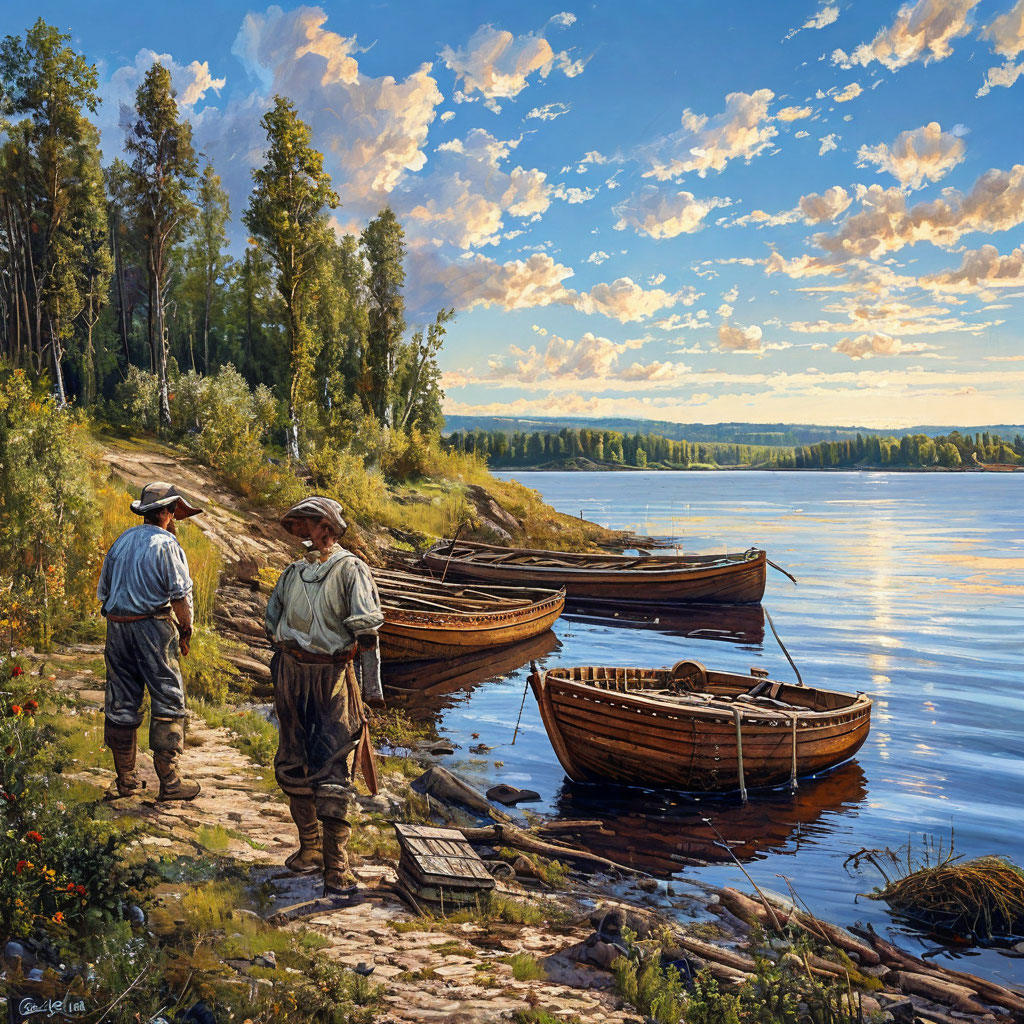
Usolye Stroganovskoe: Salt, Barges, and the Kama River Economy
Imagine a time when the vast expanse of Russia’s Ural Mountains was a land of untamed wilderness, where rivers like the Kama served as lifelines, and salt was more precious than gold. This is the story of Usolye Stroganovskoe, a place where salt, barges, and the mighty Kama River intertwined to shape the region’s economy and culture.
The Birth of Usolye Stroganovskoe
Our journey begins in the 15th century, in a small settlement known as Usolye posad or Usolsk. This was no ordinary village; it was the cradle of Russia’s salt industry. In 1515, Anikey Stroganov, a visionary merchant, recognized the potential of the area and began salt production. His enterprise laid the foundation for the Stroganov family’s fortune and transformed the region into a bustling commercial hub. By the 16th and 17th centuries, Usolye had blossomed into a center of commerce, craftsmanship, and culture, renowned for its enamel industry and vibrant trade.
The Salt Industry: A Golden Era
Salt was the lifeblood of Usolye Stroganovskoe. The Stroganovs operated the country’s largest salt-mining facilities, extracting salt from the rich deposits along the Kama River. This wasn’t just any salt; it was the finest quality, sought after across Russia and beyond. The saltworks were marvels of engineering, with wooden salt towers rising above the landscape, each serving as a beacon of the region’s prosperity. These towers were not just functional; they were symbols of innovation and resilience, standing tall against the test of time.
The Role of the Kama River
The Kama River was more than just a waterway; it was the artery that connected Usolye Stroganovskoe to the world. Barges laden with salt would navigate the river’s winding path, braving its swift currents and treacherous cliffs. The journey was perilous, with many barges meeting untimely ends due to accidents. Yet, the river remained the most efficient route for transporting salt, metals, and furs from the Ural Mountains to the rest of Russia. The importance of the Kama was so profound that the Stroganovs supplied the expedition of Ermak in 1581, using the Chusovaya River, a tributary of the Kama, to venture beyond the Urals. This act not only showcased their influence but also their commitment to exploration and expansion.
Challenges and Triumphs
Life along the Kama was not without its challenges. The river’s unpredictable nature posed constant threats to the barges. Between 1857 and 1861, about 50 barges met with major accidents on the Chusovaya River alone. In the spring of 1877, 47 barges sank, resulting in the loss of over 100 lives. The Stroganovs, ever the innovators, took measures to improve navigation. They invested in the construction of ports, such as the one at the mouth of the Utka tributary in 1703, and undertook extensive efforts to clear the river of obstacles, including blasting dangerous cliffs and removing boulders. These endeavors significantly reduced accidents and ensured the continued flow of commerce along the Kama.
The Decline and Legacy
As the 19th century progressed, the once-thriving salt industry of Usolye Stroganovskoe began to wane. The exhaustion of salt wells in the city center led to the establishment of new saltworks in Ust-Borovaya, on the left bank of the Kama River north of Solikamsk. Despite these efforts, the region’s prominence in the salt industry diminished. However, the legacy of Usolye Stroganovskoe endures. The wooden salt towers of Ust-Borovaya Saltworks stand as monuments to the ingenuity and resilience of those who built them. Today, they house the Salt Museum, preserving the rich history of salt production and its pivotal role in shaping the region’s economy and culture.
Conclusion
The story of Usolye Stroganovskoe is a testament to human ingenuity, perseverance, and the indomitable spirit of exploration. From the salt-rich banks of the Kama River to the bustling trade routes that spanned the vast Russian expanse, this region played a pivotal role in the economic and cultural tapestry of Russia. Its legacy continues to inspire, reminding us of the profound impact that a single resource, like salt, can have on the course of history.
