
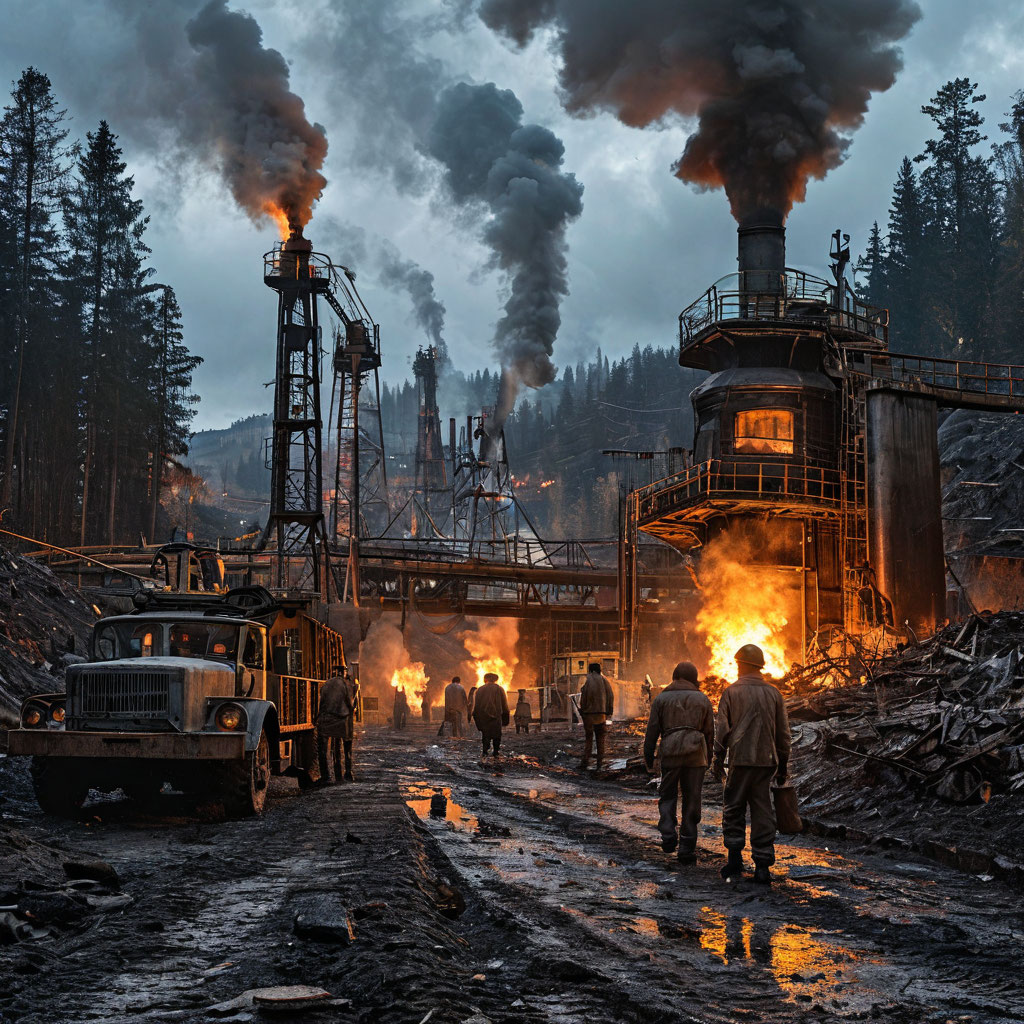
The Vysokaya Gora Mine: The Birthplace of Yekaterinburg’s Iron Industry
Imagine a time when the Ural Mountains were the beating heart of Russia’s industrial revolution. Nestled in this rugged landscape, the Vysokaya Gora Mine stands as a testament to human ingenuity and the relentless pursuit of progress. This mine didn’t just extract ore; it ignited a transformation that would shape the future of metallurgy and urban development in the region.
The Dawn of Metallurgical Innovation
In the early 18th century, Russia was on the cusp of a metallurgical renaissance. The Vysokaya Gora Mine, established in 1723, became a cornerstone of this movement. Its rich deposits of iron ore were the lifeblood of the burgeoning Yekaterinburg plant, which, by the 1720s and 1740s, had evolved into Europe’s largest metallurgical facility. This wasn’t just any plant; it was a marvel of efficiency and productivity, surpassing even the renowned English and Swedish furnaces of the time. While Swedish furnaces consumed 300 to 350 kilograms of charcoal to produce 100 kilograms of iron, Yekaterinburg’s furnaces achieved the same with just 150 to 170 kilograms. This remarkable efficiency laid the groundwork for the city’s future as a metallurgical powerhouse.
The Birth of Yekaterinburg
But the significance of the Vysokaya Gora Mine extends beyond metallurgy. Its establishment in 1723 marked the beginning of Yekaterinburg’s journey from a modest settlement to a thriving industrial city. The mine’s proximity to the Yekaterinburg plant facilitated the seamless extraction and processing of iron ore, fostering rapid urban growth. The city’s strategic location, nestled between the Ural Mountains and the Volga River, made it an ideal hub for trade and industry, attracting workers, merchants, and innovators from across Russia and beyond.
Technological Milestones and Global Influence
The 19th century was a period of remarkable technological advancements, and the Vysokaya Gora Mine was at the forefront of this revolution. In 1834, the Cherepanov brothers, pioneers in steam engineering, constructed the first steam locomotive in Russia. This locomotive was designed to transport ore from the Vysokaya Gora Mine to the Yekaterinburg plant, symbolizing a significant leap in industrial transportation. By 1840, steam engines had become a common sight in Ural factories, replacing traditional water wheels and dramatically increasing production efficiency. The introduction of these engines not only revolutionized local industry but also set a precedent for industrialization worldwide.
The Human Element: Labor and Innovation
The success of the Vysokaya Gora Mine and the Yekaterinburg plant was not solely due to technological innovations but also the dedication and ingenuity of its workers. The 18th century saw a significant influx of foreign expertise, with up to 600 German metallurgists contributing to the development of the Yekaterinburg Department’s factories. Their knowledge and skills were instrumental in refining metallurgical processes and introducing new techniques. This blend of local labor and international expertise created a dynamic environment that fostered continuous improvement and innovation.
Legacy and Modern Significance
Today, the legacy of the Vysokaya Gora Mine is evident in Yekaterinburg’s status as a major industrial center. The city’s rich history in metallurgy continues to influence its economy and culture. The mine’s contributions to the industrialization of Russia are celebrated in museums and historical sites, serving as a reminder of the human spirit’s capacity to transform challenges into triumphs. The Vysokaya Gora Mine is more than just a historical landmark; it is a symbol of resilience, innovation, and the enduring quest for progress.
Conclusion
The story of the Vysokaya Gora Mine is a captivating chapter in the broader narrative of human industrial achievement. From its humble beginnings to its pivotal role in shaping Yekaterinburg and the Ural region, the mine’s history is a testament to the transformative power of industry and the indomitable will of those who drive it forward. As you reflect on this journey, consider how the echoes of the past continue to resonate in the modern world, inspiring future generations to innovate, adapt, and build upon the foundations laid by those who came before.
